

Let’s be honest, not all affiliate marketing is created equal. High-ticket affiliate marketing is a whole different ball game. It’s a strategy where you focus on promoting premium products—the kind that pay out serious commissions, often starting at $500 or more per sale.
This isn’t about chasing hundreds of tiny sales. It’s about quality over quantity, where your success hinges on a few high-value conversions.
What Exactly Is High-Ticket Affiliate Marketing?
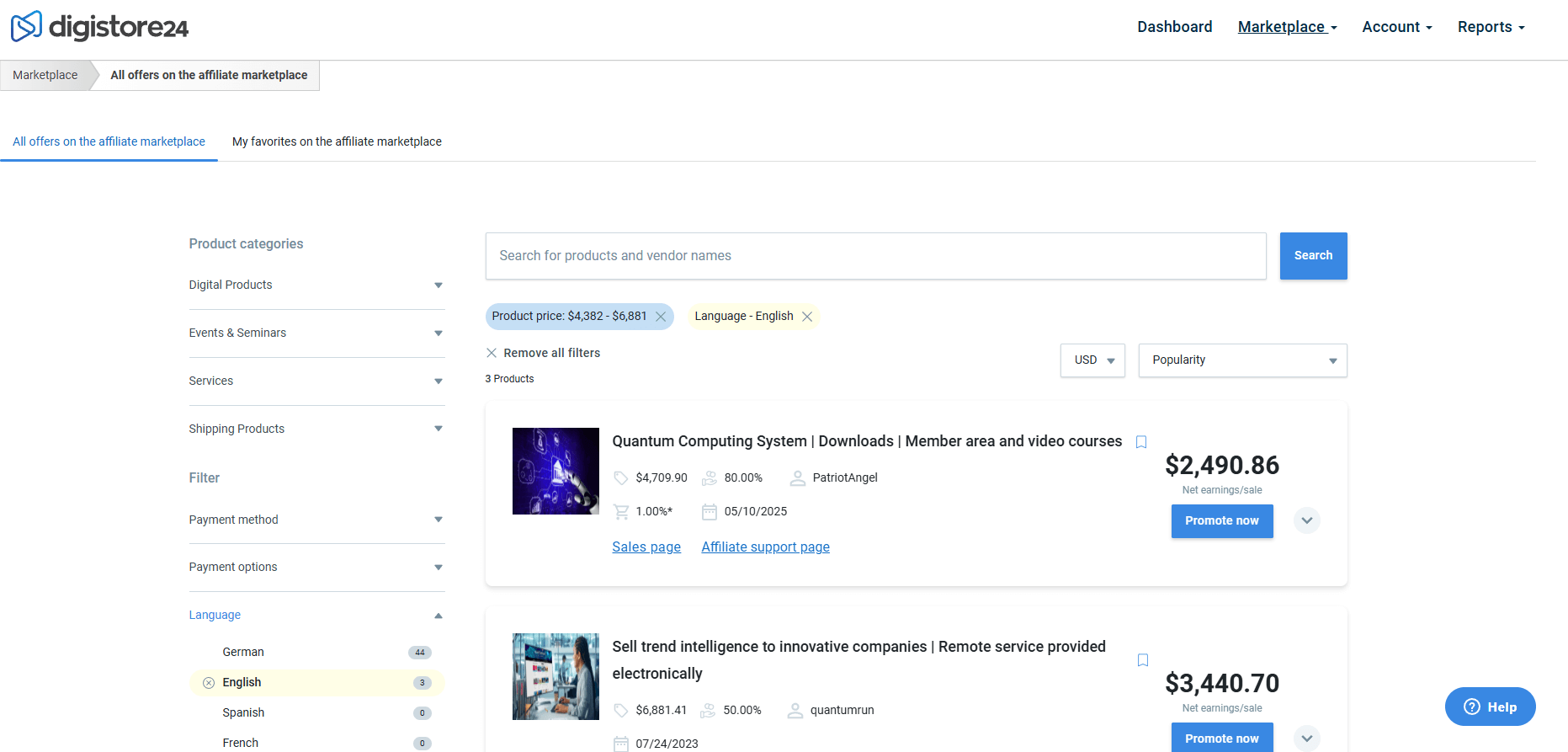
Think of it like this: you could sell everyday coffee makers, or you could sell high-end, custom-built espresso machines. Both involve sales, but one operates in a world of high-value deals and much bigger commissions. That’s the core idea here. You’re dedicating your efforts to promoting big-ticket items.
This is a world away from traditional, low-ticket affiliate marketing, which is all about volume. Selling tons of cheap stuff requires a massive amount of traffic. The high-ticket model, on the other hand, is all about precision and trust. You don’t need a huge audience; you need the right audience—people who are ready and willing to make a significant investment.
The Financial Appeal
The main reason people get into this is the earning potential. It’s just math. A single sale can bring in what would otherwise take you dozens, or even hundreds, of smaller sales to earn.
For instance, say you’re promoting a $3,000 online course with a 40% commission. That’s $1,200 in your pocket from just one referral. Now, compare that to selling a $50 book with a 5% commission. You’d need to sell that book to 480 different customers to make the same amount. See the difference?
This is why so many serious marketers gravitate toward high-value offers. It allows them to invest more time, money, and energy into acquiring each customer, because the potential return makes it all worthwhile.
Key Characteristics of This Model
Moving away from mass-market products means playing by a different set of rules. If you’re considering this path, you need to understand what makes it tick.
Here’s what really defines this approach:
- Higher Commissions: The payouts are substantial, often ranging from $500 to well over $2,000 for a single conversion.
- Longer Sales Cycles: People don’t impulse-buy expensive things. They do their homework, which means you need to nurture them through a longer decision-making process.
- Niche Audiences: High-ticket products aren’t for everyone. They appeal to a very specific, often smaller, group of people who have the means and the need for them.
- Relationship-Based Selling: Trust is everything. You have to build genuine authority and credibility to convince your audience to part with their hard-earned cash.
At the end of the day, high-ticket affiliate marketing is a more sophisticated strategy. It’s not just about slapping a link on a blog post; it’s about becoming a trusted advisor. You provide real value, build deep connections, and in return, you unlock an earning potential that most affiliate marketers can only dream of.
How High Ticket Commissions Actually Work
So, how does the money side of high-ticket affiliate marketing really stack up? It’s not like selling a $20 gadget where you get a dollar or two. We’re talking about commissions that are designed to reward you for the serious effort it takes to land a high-value customer.
Think about it this way: say you’re promoting a top-tier business coaching program. That program costs $3,000, and the affiliate deal gives you a 40% commission. Do the math. A single sale just put a cool $1,200 in your pocket.
For a lot of affiliates grinding away with low-ticket items, that’s more than they make in an entire month. That’s the power of this model right there.
Unpacking Different Commission Models
Not all high-ticket payouts are the same, though. The way you get paid can vary quite a bit, so it pays to know what you’re signing up for. Getting a handle on these different models helps you pick programs that actually fit your income goals.
Here are the main structures you’ll run into:
- One-Time Payouts: This is the most straightforward deal. You promote a product, someone buys, and you get one big commission check. It’s simple, clean, and incredibly rewarding for products with a hefty upfront price tag.
- Recurring Revenue: This is where things get interesting, especially with software (SaaS). Many high-ticket tools are subscription-based. You don’t just earn on the first sale—you get a piece of the pie every single month that customer stays subscribed. This is how you build a stable, predictable income stream that can compound over time.
- Multi-Tier Models: Some programs let you earn a little extra from the efforts of others. You can recruit other affiliates, and when they make a sale, you get a small percentage. It adds another layer to your earning potential without you having to do all the heavy lifting yourself.
These different ways to earn are a massive draw for marketers who know what they’re doing. It’s all about generating significant income from fewer sales, a pretty smart strategy in an industry expected to hit $37.3 billion globally by 2025. You can get more insights on why affiliate marketing is a solid opportunity on FluentAffiliate.com.
How You Actually Get Paid
Alright, you made the sale. When does the cash show up? This part is crucial, and thankfully, high-ticket programs are usually very clear about their payment terms.
Most programs have what’s called a “holding” or “lock-in” period. This is just a safety buffer, usually 30-60 days, to make sure the customer doesn’t ask for a refund. Once that window closes, your commission is locked in and ready for payout.
Key Takeaway: You have to be patient. Because of the big money involved and longer refund periods, the payout cycles are naturally longer than what you’d see with low-ticket offers.
You’ll typically get paid monthly or bi-weekly. The money usually arrives through standard methods you’re already familiar with:
- PayPal
- Direct bank transfer (ACH)
- Wire transfer
A lot of these programs are managed through big, trusted affiliate networks that handle all the payment processing and sales tracking. They act as a neutral third party, which gives both you and the merchant peace of mind. If you’re curious about how these platforms work behind the scenes, our Impact affiliate network review gives you a good look at one of the major players. This kind of reliable setup is what makes high-ticket affiliate marketing a secure and appealing business for serious marketers.
High Ticket Vs. Low Ticket Affiliate Models

To really get what high-ticket affiliate marketing is all about, it helps to put it next to its more common cousin, low-ticket. These two approaches couldn’t be more different—not just in the size of the check, but in the entire strategy, the audience you’re talking to, and the skills you need to pull it off. One isn’t flat-out better than the other; they just play different games for different marketers.
I like to think of the high-ticket model as a sniper rifle. It takes patience, precision, and a perfectly chosen target to get that one high-impact result. Low-ticket, on the other hand, is more like a machine gun—it’s all about volume, spraying and praying to hit something. Both can work, but how you operate them is night and day.
The Core Strategic Divide
The real split comes down to the relationship between traffic and commission value. Low-ticket affiliate marketing is a pure numbers game. Success hinges on driving an absolute ton of traffic to an offer, knowing that only a tiny fraction of those people will ever click “buy.” When you’re only making $5 a pop, you need a massive audience to make any real money.
High-ticket marketing flips that script completely. Since one sale can net you $500, $1,000, or even more, your focus shifts from the quantity of traffic to the quality of your leads. You don’t need a million visitors. You need a handful of highly qualified people who have a very specific problem that your premium product solves. This one change ripples through everything you do.
The low-ticket model chases clicks and hopes some will convert. The high-ticket model builds relationships, knowing that trust is what ultimately closes a major sale.
This fundamental difference shapes your entire marketing plan. Low-ticket affiliates often create broad, general content and use wide-net SEO to catch as many people as possible. High-ticket requires a much more focused, almost consultative approach that nurtures leads over a much longer timeline.
High Ticket vs Low Ticket Affiliate Marketing: A Strategic Comparison
To put a finer point on it, let’s break down the key differences side-by-side. This comparison should help you figure out which path lines up better with your own skills, resources, and what you want to achieve in the long run.
| Attribute | High Ticket Affiliate Marketing | Low Ticket Affiliate Marketing |
|---|---|---|
| Commission Size | High (often $500+ per sale) | Low (typically $1 – $50 per sale) |
| Sales Volume | Low volume, high value | High volume, low value |
| Sales Cycle | Long (weeks or months) | Short (often impulse buys) |
| Audience Type | Niche, highly targeted | Broad, mass-market |
| Marketing Focus | Building trust and authority | Driving high traffic volume |
| Relationship Depth | Deep, consultative relationship | Transactional, low-touch |
| Content Strategy | In-depth guides, webinars, case studies | General blog posts, reviews, lists |
As you can see, the effort you put in is channeled in completely different ways. A low-ticket affiliate might spend their day optimizing for thousands of keywords, while a high-ticket affiliate is busy crafting a detailed webinar or building a personal connection with someone on their email list.
Ultimately, picking a lane comes down to what you’re good at. If you excel at building authority, enjoy teaching an audience, and have the patience to guide people through a complex buying journey, then high-ticket affiliate marketing offers a much more direct path to significant income. It’s a marathon, not a sprint, but the prize at the finish line is a whole lot bigger.
How To Find Profitable High Ticket Niches
Alright, let’s move from theory to action. The first real step in high-ticket affiliate marketing is nailing down a profitable niche. This isn’t about jumping on the latest trend; it’s about finding specific areas where people are not just willing, but actively looking, to spend serious money to fix a big problem or get a life-changing result.
Think of it this way: a brain surgeon makes more than a general family doctor. Why? Because they solve very specific, high-stakes problems. Your goal is to be that specialist. You want to become the trusted expert in a niche where the solutions—the products you’ll promote—are naturally high-value.
Start With Evergreen Industries
The most reliable high-ticket niches are usually evergreen. This just means they have steady, long-term demand. People are always willing to invest in their health, wealth, and relationships. These big categories are packed with high-value opportunities just waiting to be found.
Here are some of the most lucrative areas to start digging:
- Business & Finance: This is a big one. Think premium business software (SaaS), investment platforms, and high-level financial coaching. Businesses and serious investors don’t hesitate to pay top dollar for tools and advice that promise a solid return.
- Health & Wellness: We’re talking way beyond basic vitamins here. This niche includes high-end home gym equipment, personalized wellness retreats, and specialized health coaching. The audience is motivated by massive life improvements and will pay for them.
- Education & Skills: High-level online courses, professional certifications, and exclusive coaching programs fit perfectly here. A course that teaches a skill leading to a six-figure job can easily sell for thousands of dollars.
- Luxury & Hobbies: This covers everything from luxury travel and private jet charters to high-end photography gear. It might seem like fluff, but these niches target people with plenty of disposable income who are passionate about their interests.
The real secret is to drill down into a sub-niche. “Finance” is way too broad, but “trading software for crypto day traders” is specific. “Health” is vague, but “premium biohacking equipment” is a targeted, high-spending market.
Evaluate Niche Potential With A Clear Framework
Once you’ve got a few ideas, you need to vet them properly. Not every high-value niche is a good fit. Your passion and expertise are non-negotiable here; you simply can’t fake authority when you’re promoting a $5,000 product. Your audience needs to genuinely believe you know your stuff.
Before you jump in, run your potential niches through these four critical checks:
- Audience Buying Power: Does your target audience actually have the money to buy expensive products? A niche focused on broke college students is a dead end for high-ticket offers.
- Product Value & Commission: Are there reputable products in this niche that offer chunky commissions (ideally $500+ per sale)? Do some digging into existing affiliate programs to make sure the earning potential is real.
- Your Genuine Expertise: Do you have personal experience, professional knowledge, or a deep passion for this topic? Authenticity is your most powerful asset in high-ticket affiliate marketing. It can’t be faked.
- Competitive Landscape: Is the niche totally dominated by huge players, or is there room for a new, authoritative voice? A bit of competition is a good sign—it proves the market is alive and well.
Finding that sweet spot where market demand meets your personal passion is the foundation for a business that lasts. For a deeper dive, my guide on choosing from the most profitable affiliate marketing niches breaks down even more detailed strategies. Getting this part right ensures you’re building your business on solid ground from day one.
Building Your High Ticket Marketing Funnel
Let’s be real—a high-ticket sale hardly ever happens on the first click. We’re talking about considered purchases, often running into thousands of dollars. Potential buyers need more than just a slick product page to pull the trigger.
This is where your marketing funnel comes in. It’s not just a tool; it’s your single most valuable asset. Think of it as a guided journey that turns a slightly curious visitor into a confident, trusting customer.
Your funnel is basically a sophisticated relationship-building machine. Instead of just shouting about your offer, you’re inviting the right people into a conversation. You give them immense value upfront and gently guide them toward a solution that actually solves their problems. A well-built funnel automates this whole dance, making sure every lead gets the right message at exactly the right time.
This visual gives you a high-level look at the process, starting with finding the right niches to feed into your funnel in the first place.
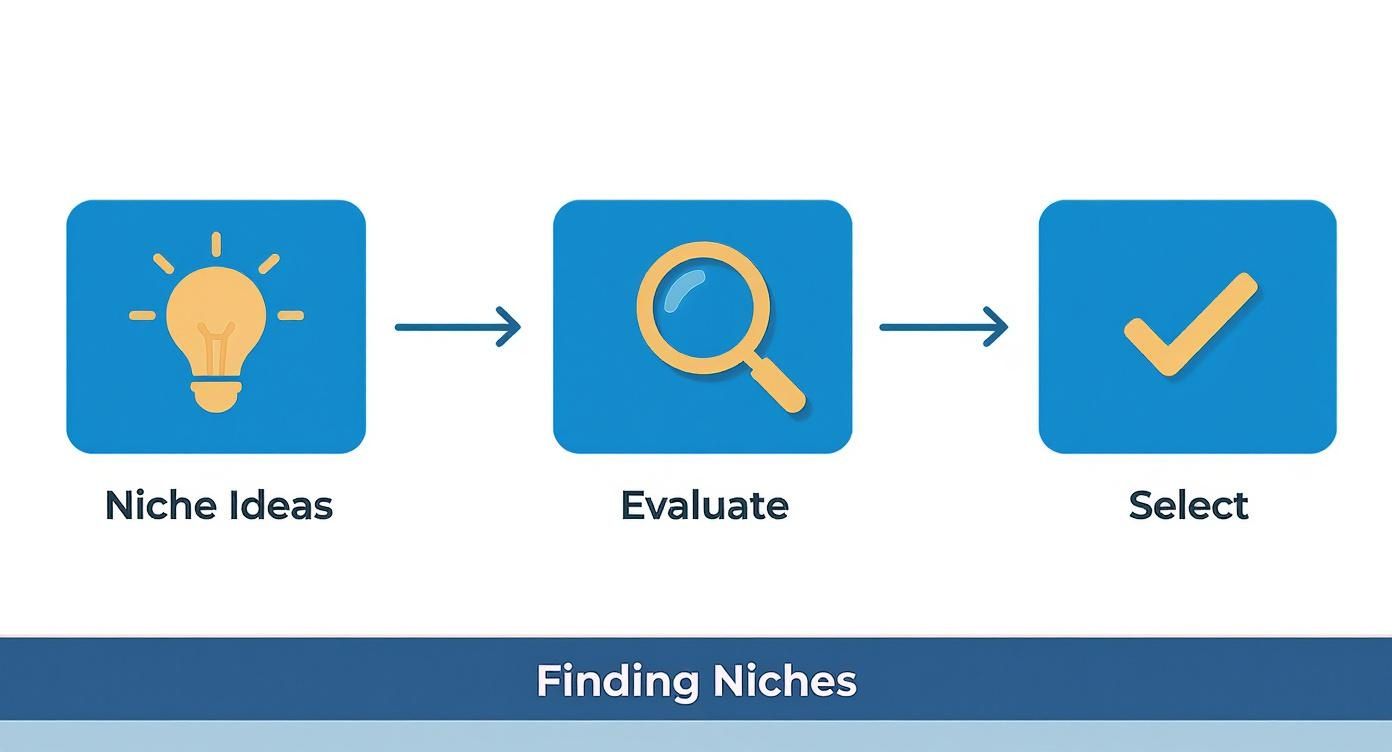
As the infographic shows, success doesn’t just start when you build the funnel. It begins much earlier, with a smart approach to picking a profitable niche by brainstorming ideas, sizing them up, and then making a final call.
Stage 1: Attracting Qualified Leads With a Lead Magnet
The top of your funnel is all about attraction. You need to offer something so genuinely valuable that your ideal customer is more than happy to trade their email address for it. We call this a lead magnet, and for high-ticket products, a simple PDF checklist just isn’t going to cut it.
Your lead magnet has to solve a specific, high-stakes problem for your audience.
- In-depth Webinars: Host a live or automated webinar that teaches a complex skill or drops an industry secret tied to the affiliate product.
- Comprehensive Guides or Ebooks: Go deep. Create a detailed guide that becomes the go-to resource on a topic.
- Email Courses: Deliver a multi-day course right to their inbox, walking them through a valuable process step-by-step.
The goal isn’t to get everyone; it’s to get the right people. A strong lead magnet acts as a filter, weeding out the casual browsers and capturing the details of prospects who are genuinely interested.
Stage 2: Converting Visitors With a High-Impact Landing Page
Okay, so you’ve got your killer lead magnet. Now you need a dedicated spot to offer it. That’s your landing page—a single webpage with one job and one job only: to convince visitors to sign up.
For a high-ticket offer, this page needs to be persuasive, professional, and laser-focused on the benefits of your freebie. An effective page builds trust right away. It should have a killer headline, benefit-driven bullet points, and an unmissable call-to-action.
To learn more about putting together pages that actually turn visitors into leads, check out this detailed guide on creating high-converting affiliate marketing landing pages.
A great landing page isn’t a brochure; it’s a focused sales pitch for your free offer. It removes all distractions and makes the decision to sign up an easy one.
Stage 3: Nurturing Trust With an Email Sequence
This is where the real magic happens. Once someone is on your email list, you start the most important part of the process: building a relationship. An automated email sequence lets you deliver value, build your authority, and earn their trust over several days or even weeks.
This sequence should not be a constant sales pitch. That’s a quick way to get ignored. Instead, focus on teaching and telling stories.
- Welcome & Delivery: Your first email should say hello and, most importantly, deliver the lead magnet they signed up for.
- Value & Education: The next few emails should offer more helpful tips, share personal anecdotes, or link to useful content like blog posts and videos.
- Case Studies & Testimonials: Start introducing social proof. Share success stories from other people who have used the product you’re promoting.
- The Soft Pitch: Now you can begin positioning the affiliate product as the ultimate solution to the problems you’ve been talking about.
- The Direct Offer: Finally, you make a clear, compelling offer with a strong call-to-action to check out the product.
To manage all this effectively, you’ll need the right tools. Looking into some dedicated WordPress Affiliate Marketing Plugins can give you the infrastructure you need. This entire journey warms up your audience, so by the time you actually present the offer, they already see you as a trusted advisor—making them far more likely to buy.
Common Landmines To Sidestep On Your Journey
Jumping into high-ticket affiliate marketing is exciting, but let’s be real—the road to those big commissions has its share of traps. I’ve seen countless new affiliates get tripped up by the same mistakes, losing time, money, and momentum. Think of this as your field guide to spotting those landmines before you step on them.
One of the biggest blunders I see is a complete mismatch between the product and the audience. It’s easy to get starry-eyed over a massive commission, but trying to sell a sophisticated SaaS tool to a bunch of beginner bloggers is like trying to sell a race car to someone who just needs to get groceries. The product has to solve a real, pressing problem for the people you’re talking to.
Mismanaging The Longer Sales Cycle
This one gets people every time. You can’t treat a $2,000 product like a $20 impulse buy. It just doesn’t work that way. A high-ticket sale involves a lot of thought, research, and comparison. If you’re expecting instant conversions, you’re going to get discouraged fast.
The buying journey for a premium product can take weeks, sometimes even months. Your job isn’t to be a pushy salesperson; it’s to be a patient, trusted guide. You need to consistently show up with valuable content, answer questions, and build a real relationship. Trying to rush the sale will only spook discerning buyers who need to feel 100% confident before they pull out their credit card.
Trying to rush a high-ticket sale is like trying to bake a cake in a microwave—you’ll just end up with a mess. You have to respect the customer’s timeline and nurture that relationship with patience and genuine expertise.
Relying On Aggressive Sales Tactics
Another classic mistake is using old-school, hard-sell tactics that sophisticated buyers see right through. Phrases like “Act Now!” or “Limited Time Offer!” might work for cheap trinkets, but they destroy your credibility when you’re promoting a serious investment. High-ticket customers are looking for an expert advisor, not a used car salesman.
Instead, your content needs to feel more like a helpful consultation. Focus on educating and solving problems.
- Educate First: Don’t just promote; teach. Create detailed guides, case studies, and honest comparison articles that empower your audience to make a smart decision on their own terms.
- Build Authority: Position yourself as a go-to resource who actually gets their struggles, not just another person pushing a product link.
- Demonstrate Value: Show, don’t just tell. Use tutorials, live demos, and real-world examples to prove how the product delivers a tangible return on their investment.
Ignoring The Global Opportunity
A lot of affiliates get tunnel vision, focusing only on their home country and leaving a massive amount of money on the table. High-ticket affiliate marketing is blowing up all over the world, especially in developing economies.
For example, the Asia-Pacific region is on track to contribute 23–33% of global affiliate revenue by 2025. This is fueled by more people getting online and a growing demand for premium services in areas like education and real estate. In fact, customers from these programs often have a lifetime value 22% higher than those from direct channels. That’s a huge, untapped goldmine for marketers who think globally. You can dig into more of these stats in this great breakdown of the affiliate marketing industry on Udonis.co.
By dodging these common mistakes—picking the right product, respecting the sales cycle, being a helpful advisor, and seeing the bigger global picture—you set yourself up for real, sustainable success. This is the strategic thinking that separates the affiliates who fizzle out from those who build profitable, long-term businesses.
Frequently Asked Questions
Jumping into high-ticket affiliate marketing always brings up a few questions. I get it. It’s a big shift from chasing small commissions. Here are some of the most common ones I hear, with straight-up answers based on what I’ve seen work.
How Much Capital Do I Need To Start?
This is the big one, and the honest answer is: it depends.
You could technically start with almost nothing—just the cost of a domain and some cheap hosting. But if you want to see results this decade, a more realistic starting budget is somewhere between $500 to $2,000. That money typically goes toward the essential tools of the trade: an email autoresponder, decent landing page software, and maybe a small ad budget to get the ball rolling.
But look, if you’re strapped for cash, you can absolutely start with organic strategies like SEO and content creation. Just know that you’re trading money for time. The key is to pick a lane that matches your wallet and your patience.
How Long Does It Take To Get The First Sale?
Patience is the name of the game here. We’re not selling $10 gadgets; high-ticket offers have a much longer sales cycle because people need to trust you before they drop serious money.
Being realistic, you should expect it to take anywhere from three to six months to land your first big commission, especially if you’re building an audience from scratch.
This all depends on your niche, how quickly you can build that know-like-and-trust factor, and your strategy. Someone running targeted paid ads might see a sale faster than a person grinding it out with SEO, which takes time to gain traction.
The first sale is always the hardest. You’re breaking through that initial wall of skepticism. Once you prove you can deliver value, the next ones come a lot easier because your reputation starts doing the heavy lifting for you.
Can I Succeed Without My Own Website?
Yes, it’s possible… but you’re making life way harder for yourself. Think of a website as your home base. It’s the one piece of internet real estate you actually own and control.
Without one, you’re essentially building your business on rented land—like a social media profile that could get shut down tomorrow.
You can definitely make things work with a strong YouTube channel or a dedicated email list. But a website gives you the power to create in-depth content, rank on Google for valuable keywords, and build a real brand asset that appreciates over time. Don’t skip it if you’re serious.
What Are The Most Effective Traffic Sources?
For high-ticket products, you need traffic with intent. You’re not looking for casual browsers; you want people actively searching for a solution to an expensive problem.
- Search Engine Optimization (SEO): This is my favorite for a reason. Attracting people who are literally typing their problems into Google is pure gold. It’s slow to start but incredibly powerful long-term.
- Paid Search Ads: If you have the budget, targeting very specific, long-tail keywords can put highly qualified leads directly into your funnel, fast.
- YouTube: Nothing builds trust like video. In-depth reviews, tutorials, and case studies are the perfect way to educate your audience on complex products and show them you know what you’re talking about.
Ready to stop guessing and start building a real affiliate business? At Daniel Proctor, we provide the step-by-step mentorship and proven playbooks to shorten your learning curve. Learn more about our approach at https://danielproctor.com.
