


Alright, let’s cut to the chase. Is the Namecheap affiliate program actually worth your time?
For most people, the answer is a resounding yes. This is especially true if your audience is full of beginners just starting to build their first website. Personally, I have used Namecheap for many of my domains over the years, and I can say their platform is incredibly easy to use, which makes it an ideal recommendation for newcomers. That simplicity is a huge advantage when you’re trying to convert referrals.
Why The Namecheap Affiliate Program Is Worth It
This review will break down the good and the bad, but the core value is obvious. Promoting a well-known name like Namecheap just lowers the barrier to entry. Your audience probably already knows who they are, which means less time spent convincing and more time spent earning. That inherent user-friendliness and brand recognition are massive advantages for you as an affiliate.
Let’s quickly run through the key details of the program.
Namecheap Affiliate Program at a Glance
Here’s a quick look at what the Namecheap affiliate program offers, so you can see the main features in one place.
| Feature | Details |
|---|---|
| Commission Rate | Up to 50% on select products |
| Product Commissions | 20% on Domains, 35% on Hosting, 50% on SSL Certificates |
| Cookie Duration | 30 days |
| Affiliate Network | Impact, Commission Junction, ShareASale |
| Payment Threshold | Varies by network (e.g., $10 on Impact) |
| Ideal For | Bloggers, YouTubers, marketers with a beginner-focused audience |
As you can see, the program is pretty straightforward with competitive rates, especially for hosting and SSLs.
The Benefits of Promoting a Well-Known Brand
Pushing an established company like Namecheap gives you a serious head start compared to promoting some random, unknown alternative. Here’s what that actually means for you:
- Built-In Trust: Namecheap has been a major player in the domain and hosting world for over two decades. That reputation means your audience is far more likely to trust your recommendation, leading to better click-through rates and more sales.
- Easier Conversions: Because people already know the brand, you can skip the whole “who is Namecheap?” introduction. Instead, your content can focus on how to use their services, shifting your role from a salesperson to a genuinely helpful guide.
- Wide Range of Products: You’re not just stuck promoting domains. Namecheap offers hosting, SSL certificates, VPNs, and professional email. This gives you a ton of different products to promote and earn from.
The real advantage here isn’t just the commission rate—it’s the reduced friction in the sales process. When you recommend a household name, you borrow its credibility, making your job as an affiliate marketer that much easier.
While there are tons of platforms out there, and you should definitely check out some of the best web hosting affiliate programs to compare, Namecheap’s combination of brand authority and beginner-friendly tools makes it a really compelling place to start.
How Namecheap Affiliate Commissions and Payouts Work
Let’s get right to the most important part: how you actually make money. Every affiliate program is a little different, and with Namecheap, it’s pretty straightforward once you get the hang of it. You need to know their commission structure, how they track sales, and how you get paid. Think of it like a restaurant menu—some items just have better margins than others.
The whole program is built around a tiered commission structure. What that means is you get paid different rates for different products. Hosting packages are your big-ticket items. They’re what everyone needs to start a website, and they also happen to pay out the highest commission rates.
Domains, on the other hand, are like the profitable side dishes. They’re essential, super easy to sell, and those smaller commissions really start to add up over time. This lets you get creative with your promotions. If your audience is building a whole site from scratch, pushing hosting bundles can land you a nice chunk of change from a single referral. But if they’re just trying to lock down a brand name, promoting domain registrations is a quick and easy win.
Breaking Down The Commission Rates
Namecheap offers pretty competitive rates that change depending on what you sell, rewarding you more for the higher-value stuff. The commissions generally float between 20% to 35%, but they sometimes run special promotions that can go as high as 100% (like for the first month of their VPN service).
For example, you can snag a 35% commission on hosting packages. If someone buys a $40 hosting plan using your link, that’s about $14 in your pocket. Domain registrations get you a 20% commission, so a $12 domain sale turns into a $2.40 payout. These rates are a big reason why this program is so popular. For the full breakdown, you can check out the official Namecheap commission structure on their website.
Here’s a quick look at what you can expect to earn:
- Hosting Packages: These are the heavy hitters, often bringing in a 35% commission.
- SSL Certificates: Security is a must-have, and you’ll earn 35% on these sales.
- Domain Registrations: A steady earner at a 20% commission rate.
- VPN Services: These can be surprisingly profitable, with promos sometimes offering up to 100% on the first month.
- Private Email: Another solid product that pays a 20% commission.
This infographic really shows why promoting a brand like Namecheap just works for affiliates.
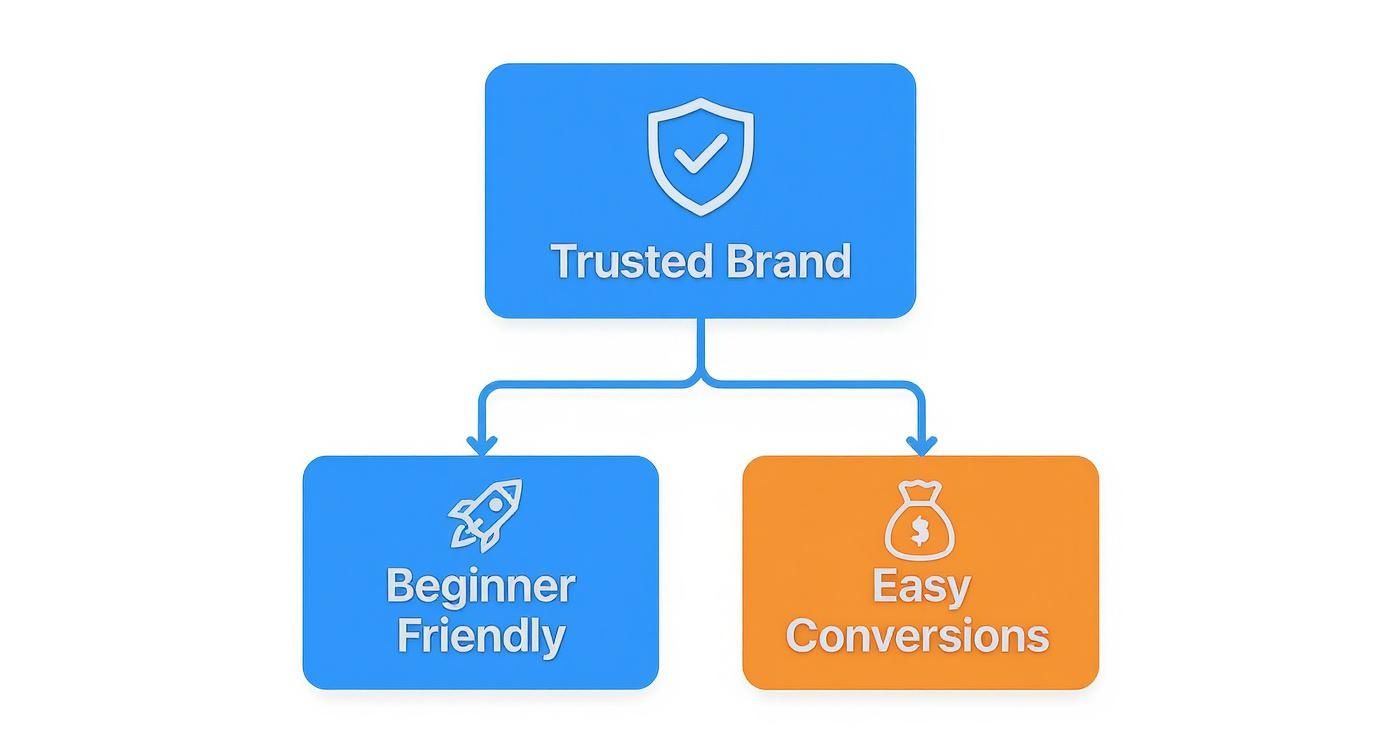
As you can see, because Namecheap is already a trusted brand and their platform is so easy for beginners, it makes getting those conversions a whole lot easier for you.
Understanding The Cookie Window
A critical piece of any affiliate program is the cookie duration. Namecheap gives you a 30-day cookie window, which is pretty standard for the industry. This just means that when someone clicks your affiliate link, a small tracking file—a cookie—gets saved in their browser for 30 days.
What does this mean for you? Simple. You get credit for the sale as long as the customer makes their first purchase within that 30-day window. It doesn’t matter if they buy right away or come back a few weeks later. This gives your audience some breathing room to think things over without you losing out on the commission.
One thing to keep in mind, though: commissions are usually only paid on the first purchase from a new customer. If that same person comes back later and buys something else, you won’t earn a second commission. This setup really encourages you to keep bringing in fresh new customers.
The Payout Journey From Sale to Your Bank
Once you’ve made a sale, the money doesn’t just magically show up in your account. It has to go through a clear process, managed by an affiliate network that acts as a trusted middleman.
- Joining a Network: First, you’ll sign up for the Namecheap program through an affiliate network like Impact or CJ Affiliate (Commission Junction). These platforms are the ones that handle all the tracking, reporting, and payment processing.
- Meeting the Threshold: Each network has a minimum amount you need to earn before they’ll pay you. For example, Impact’s threshold can be as low as $10, while CJ’s is often around $50. You have to hit that number before you can cash out.
- Choosing Your Payout Method: Once you’ve met the threshold, you can get paid. The most common ways are through PayPal or a direct bank transfer (EFT).
- Scheduled Payments: Payouts aren’t random; they happen on a regular schedule, usually once a month. Impact often pays out on the 1st or 15th, while CJ typically processes payments around the 20th of the month.
The whole system is built to be transparent and reliable, so you can trust that you’ll get your earnings on time once you meet the requirements.
How to Join The Namecheap Affiliate Program
Ready to get started? The good news is that joining the Namecheap affiliate program is refreshingly simple. It feels less like a stuffy application and more like a straightforward onboarding process designed to get you promoting as quickly as possible.
Your first decision is which affiliate network to sign up through. Namecheap doesn’t run its program in-house; instead, it partners with big platforms like Impact and CJ Affiliate (Commission Junction). Just think of these networks as the middlemen who handle all the technical stuff—from tracking your clicks to sending you your money.
If you’re already using one of these networks for other affiliate programs, the choice is a no-brainer. Stick with what you know. It keeps all your earnings in one spot, which helps you hit that minimum payout threshold faster. If you’re completely new, I’d lean towards Impact. Their payout threshold is just $10, which is great for beginners.
The Step-by-Step Signup Process
Once you pick a network, you’ll walk through a pretty standard multi-step application. It’s important to fill this out thoughtfully. This is your one shot to make a good first impression.
- Provide Basic Information: You’ll start with the usual stuff—your name, email, company details, and website URL. Quick tip: always use a professional email tied to your domain (like
you@yourwebsite.com). It just looks more serious and credible. - Describe Your Promotional Methods: This is the part that really matters. They want to know how you plan to send them traffic. Don’t just say “blogging.” Get specific. Tell them you’ll be writing “step-by-step guides for setting up a new website” or creating “YouTube tutorials on choosing the right domain name.” A clear plan shows you’ve actually thought this through.
- Submit Your Tax and Payment Details: To get paid, you need to handle the paperwork. This means filling out the right tax forms (like a W-9 if you’re in the US or a W-8BEN for international folks) and linking your preferred payment method, whether that’s PayPal or a direct bank transfer.
- Agree to the Terms: Before you hit submit, you have to check the box saying you agree to the rules. It’s tempting to just skim, but it’s really worth taking a few minutes to read the full Affiliate Program Agreement so you know exactly what the dos and don’ts are.
What Happens After You Apply
After you submit your application, it lands in a review queue. The team at Namecheap actually has real people who look at every single submission to make sure your site and promotion plans are a good match for their brand.
The whole process is surprisingly fast. Most affiliates I’ve talked to report getting approved within 24 to 48 hours.
Once you get the green light, a welcome email hits your inbox, giving you instant access to your affiliate dashboard. This is your command center. You’ll find all your unique tracking links, banner ads, and reports here. Your first job is simple: grab your links and start weaving them into your content.
Honestly, the entire process is built to be painless, even if you’ve never done affiliate marketing before. As long as you present your website professionally and show them you have a solid plan, your chances of getting approved quickly are pretty high. From there, you’re officially in the game and ready to start earning.
An Honest Look at The Pros and Cons
Every affiliate program has its quirks, and Namecheap is no different. To give you the full story, we need to look at both the good and the bad. I’ve used Namecheap for many of my own domains over the years, so I know the platform inside and out. It’s incredibly easy to use, which makes it a no-brainer recommendation for beginners, but that’s not the whole picture.
Let’s break down what works and what doesn’t so you can figure out if this program is a good fit for your audience and, just as importantly, your bank account.
Pros: Why You Should Promote Namecheap
- Trusted Brand Name: One of the biggest advantages is promoting a name people already know and trust. This built-in brand recognition is your secret weapon. It massively reduces the friction to get someone to buy, as you spend less time explaining who Namecheap is and more time showing how they can solve a problem.
- Beginner-Friendly Platform: I can personally vouch for how simple their dashboard is. This makes it an easy sell to newcomers who might be intimidated by the clunky interfaces of other registrars.
- High Commissions on Key Products: While domain margins are slim, the 35% commission on hosting and SSL certificates is where the real money is. A single hosting sale can easily be worth more than a dozen domain registrations.
- Low Payout Threshold: If you sign up through a network like Impact, the payout threshold is only $10. This is a huge plus for new affiliates because you can get paid much faster than with programs that make you wait until you hit $50 or $100.
- Wide Range of Products: You’re not stuck promoting just one thing. You can earn from domains, shared hosting, VPNs, professional email, and more. It gives you multiple ways to make money from the same program.
Cons: Potential Downsides to Consider
Okay, let’s get real about the drawbacks. While Namecheap has a lot going for it, you need to go in with your eyes open. Understanding the cons helps you build a smarter promotional strategy.
- Low Domain Commissions: This is the biggest thing to know. At 20%, the payout on a single domain is pretty small. A typical $12 domain sale will only net you around $2.40. To make any real money from domains, you need to be selling a ton of them.
- Focus on High-Ticket Items is a Must: Because domain commissions are low, you’re pretty much forced to focus on higher-ticket items like web hosting to see worthwhile earnings. It’s not a deal-breaker, but you have to factor this into your content strategy.
- Highly Competitive Market: The domain and hosting space is brutally competitive. You’ll be up against thousands of other affiliates promoting them, not to mention the armies promoting giants like GoDaddy, Hostinger, and Bluehost. Success requires carving out a specific niche.
Proven Strategies to Boost Your Affiliate Earnings

Alright, so joining the Namecheap affiliate program is the easy bit. The real work is turning those affiliate links into an actual income stream. Let’s get past the basics and into a real playbook you can use to start banking consistent commissions.
The secret isn’t just spamming links everywhere. It’s about creating genuinely useful content that solves a real problem for your audience.
I’ve used Namecheap for a bunch of my own domains over the years, and I can tell you straight up: their platform is dead simple to use. This is your biggest advantage. It makes them the perfect recommendation for beginners who get freaked out by the more complicated competitors. Your content needs to lean into this, walking people through steps that seem scary but are actually a piece of cake with Namecheap.
Think of yourself as a helpful guide, not a sleazy salesperson. When people succeed because you helped them, they’ll trust you. And when they trust you, they’ll use your links. Simple as that.
Create Content That Converts for Bloggers
If you’re a blogger, your best bet is to focus on solving specific problems for people who are ready to buy. These folks are already Googling with their wallets out; your job is to point them straight to Namecheap.
- Comparison Posts: Write detailed “Namecheap vs. [Competitor]” articles. Don’t just list features. Talk about the actual user experience, who the customer support is good for, and the real-world pricing. A title like “Namecheap vs. GoDaddy for Beginners” is perfect because it targets a specific person with a specific need.
- Step-by-Step Setup Guides: This is where you can really deliver value. Create tutorials like “How to Buy Your First Domain with Namecheap” or “How to Set Up a Professional Email in 10 Minutes.” These guides are gold because you can naturally drop your affiliate link at every critical step.
- Target “Buyer Intent” Keywords: Get smart with your SEO. Instead of a broad term like “web hosting,” go after long-tail keywords like “best affordable hosting for a portfolio website” or “cheapest way to register a .com domain.”
Creating this kind of helpful, targeted content brings in traffic that’s way more likely to convert. For a closer look at what’s possible, you might want to check out my guide on https://danielproctor.com/how-much-do-affiliates-make/ using these very strategies.
Build a Simple and Effective Sales Funnel
You don’t need some ridiculously complex system to make sales. A basic funnel is all it takes to guide someone from just looking to actually buying.
- Attract with Valuable Content: This is the top of your funnel—your blog posts, YouTube videos, or social media content that solves a problem.
- Capture Leads with an Opt-In: Offer a freebie. Something like a “Website Launch Checklist” in exchange for their email address. Now they’re not just a visitor; they’re a lead.
- Nurture with an Email Sequence: Send a few emails that build trust. Share more tips, link to your best tutorials, and then naturally suggest Namecheap. By the way, if you’re serious about email, you’ll need effective email list cleaning to protect your sender reputation.
- Convert with a Clear Call-to-Action: Don’t be shy. In your emails and on your site, tell people exactly what to do. Use direct CTAs like “Get Your Domain Today” and pop your affiliate link right there.
This simple process builds a relationship, so when you ask for the sale, it feels like a genuine recommendation, not a hard sell.
Leverage Promotional Assets and Program Incentives
Don’t sleep on the tools Namecheap gives you. Inside their affiliate dashboard, you’ll find a ton of professionally designed banners, logos, and links that can seriously boost your conversions. Use them to make your content look more credible and visually appealing.
Remember, the Namecheap program is set up to reward top performers. The more sales you drive, the more you can unlock higher commission tiers and really ramp up your earnings.
The numbers don’t lie. Namecheap’s tiered structure is designed to motivate you. Affiliates can earn from $70 up to $100 per sale once they hit milestones like 101+ referrals. This model pushes you to increase your monthly sales to max out your commissions. The program also has a cookie duration of up to 60 days in some cases, which is double the industry standard and gives you a much bigger window to get credit for a sale.
Getting Around the Affiliate Dashboard and Tools

Alright, once you’re approved, it’s time to dive into your dashboard. This is your mission control, whether you’ve signed up through Impact or CJ. Everything you need to get rolling with Namecheap promotions is right here. Think of it as your personal toolkit, ready for you to get to work.
From this central spot, you can grab your unique affiliate links, pull down some eye-catching banners, and even create custom links that send your audience to very specific pages on the Namecheap site. The whole thing is designed to be pretty intuitive, so even if you’re new to this, you won’t feel lost.
Grabbing Your Promotional Assets
The very first thing you’ll probably do is hunt down your main tracking link. This is the golden URL that makes sure you get credit for any sales you send their way. Beyond that, you’ll find a whole library of ready-made creative assets waiting for you.
- Banners and Creatives: Namecheap provides a solid selection of professionally designed banners. They come in all the standard sizes, so you can easily slot them into your website’s layout.
- Text Links: These are simple, pre-made text links you can weave into blog posts, video descriptions, or emails. Super easy.
- Deep Linking Tools: This is a game-changer. Instead of just linking to the homepage, you can create a custom link to any page on Namecheap’s site. Writing about their VPN service? Link straight to it. This almost always boosts conversion rates.
Using these tools is dead simple. The platforms give you the HTML code to just copy and paste right into your site. If you want to go a bit deeper, we have a complete guide on other essential affiliate marketing tools that can really level up what the dashboard offers.
Reading Your Performance Reports
Now for the fun part—the reporting suite. This is where you stop guessing and start making real, data-driven decisions that can seriously boost your earnings.
Your dashboard is a live look at how you’re doing. By checking it regularly, you’ll see which content is actually driving clicks, which offers are converting, and where you should be putting your time and energy to make the most money.
These reports track all the key stuff: clicks, conversions, commission amounts, and your overall earnings. By partnering with big players like Impact and CJ Affiliate, Namecheap has given affiliates access to top-tier tracking and reporting. It’s a huge step up from the old days, letting you monitor your campaigns in real-time with far more accuracy.
By digging into this data, you’ll quickly see what’s working and what’s falling flat. This lets you tweak your strategy, double down on your winners, and ultimately, put more money in your pocket.
Final Questions & Straight Answers
Alright, let’s wrap this up by tackling some of the most common questions I get about the Namecheap program. Making the call on whether to join any program means getting straight answers, and these should clear things up.
How Much Can I Realistically Earn?
This is the big one, right? Look, your earnings come down to your traffic, how much your audience trusts you, and your strategy. A beginner with a small, niche blog could realistically pull in $60 to $300 a month if they focus on higher-value products like hosting.
Once your traffic starts picking up, a creator with a decent following could see that climb to $1,500+ per month. That’s usually from a steady stream of promotions mixing hosting plans and their VPN service. The top-tier affiliates? They make way more, but that’s because they’re driving serious, relevant traffic every single day.
What Are The Best Products To Promote?
If you want to maximize your commissions, you’ve got to be strategic. Sure, domain sales are easy to get, but that’s not where the real money is.
- Hosting Packages: This is your bread and butter. With a 35% commission, one good hosting sale can easily beat a dozen domain registrations.
- SSL Certificates: These also offer a 35% commission. It’s a natural and essential upsell for anyone who’s serious about their new website.
- VPN Plans: Honestly, this is a bit of a goldmine. Commissions can hit 53% for annual plans. If your audience cares at all about online privacy, promoting FastVPN is a no-brainer.
Focus your content here. It’s the difference between earning coffee money and earning a real income.
Are There Restrictions On How I Can Promote?
Yes, and this is pretty standard stuff. Namecheap, like any solid company, protects its brand. The big rule is that you can’t bid on their branded keywords in paid ad campaigns. And, obviously, you need to stay away from anything that feels spammy or dishonest.
Always be transparent and disclose your affiliate relationship—it builds trust. As long as you stick to creating helpful, honest content and play by their rules, you’ll be in a good position to build a long-term, profitable partnership.
Ready to build a profitable affiliate business with the right guidance? At Daniel Proctor, we provide the mentorship, tools, and step-by-step playbooks to help you succeed. Learn how to start and scale your affiliate income today.
