

So, is the Booking.com affiliate program actually worth it? For most travel creators, the answer is a solid yes, but it definitely comes with a few strings attached. The massive brand recognition and an insane inventory of over 28 million places to stay can be a goldmine for conversions. But—and this is a big but—its session-based cookie and high payout minimum are serious drawbacks you need to weigh before jumping in.
Why This Booking.com Affiliate Program Review Matters
Figuring out if Booking.com is a smart move for your brand isn't a simple yes-or-no question. It’s a strategic choice that really depends on who your audience is, how much traffic you get, and how you promote things. Think of it less like a magic bullet and more like a specialized tool in your monetization kit. It's brilliant for some things and falls flat on others.
This review is your shortcut to an informed decision. I'm cutting through the noise to focus on what actually impacts your bank account.
Before we dive deep, here's a quick look at the program's essentials.
Booking.com Affiliate Program At A Glance
| Feature | Details |
|---|---|
| Commission Rate | 25% – 40% of Booking.com's commission (not the total booking value). |
| Commission Type | Performance-based tiered model. |
| Cookie Duration | Session-based only. The user must book in the same session. |
| Minimum Payout | €100 (approximately $108 USD). |
| Payment Methods | PayPal (for individuals), Bank Transfer. |
| Best For | High-traffic bloggers and creators with an audience ready to book immediately. |
| Program Management | In-house platform. |
This table gives you the highlights, but the real story is in the details, especially how those features work together in the real world.
Here’s a quick rundown of what makes this program both so tempting and so tricky:
- Unmatched Brand Trust: Let's be honest, Booking.com is a household name. When you send people their way, you're tapping into decades of brand-building. That trust often translates into much better conversion rates compared to smaller, lesser-known platforms.
- Vast Global Inventory: With listings in over 220 countries, you can find something relevant to promote no matter your travel niche. Luxury hotels in Paris? Check. Remote villas in the countryside? Also check.
- Performance-Based Commissions: The program has a tiered structure that rewards affiliates who bring in consistent bookings. You start at 25% of Booking.com’s take and can climb all the way to 40% as your number of monthly stayed bookings goes up.
- Significant Drawbacks: That session-based cookie is a huge hurdle. You only get paid if someone clicks your link and books right then and there, in the same browser session. On top of that, the €100 minimum payout can feel like a long wait if you're just starting out or have a smaller audience.
The official affiliate partner page does a great job of highlighting its global scale and massive inventory.
This landing page really hammers home the program's two main selling points: its enormous scale and the potential to earn, which are the big draws for high-volume affiliates.
The core idea is simple: cash in on a globally recognized travel brand to monetize your content. But your success really boils down to your ability to drive traffic that's ready to book now.
It's also worth noting that Booking.com has been cleaning house recently. They’ve terminated agreements with a lot of smaller creators to focus on their higher-performing partners. The message is loud and clear: they're prioritizing quality and consistent volume over just having a ton of affiliates. Knowing this is crucial before you pour your time and energy into the program. This guide will give you the full picture so you can decide if it's the right fit for your long-term goals.
Breaking Down The Booking.com Commission Structure
Alright, let's get into the most important part: how you actually make money. Booking.com’s system isn't your typical flat-rate deal, and it’s crucial to understand how it works.
Instead of paying you a percentage of the total booking price, you earn a share of Booking.com's own commission.
Think of it this way: a hotel pays Booking.com a fee for sending them a customer. As an affiliate, your job is to send that customer to Booking.com. In return, they slide a piece of their fee over to you. This is a super important distinction because your earnings are calculated on a smaller number than what the traveler actually paid.
The good news? The whole system is built to reward performance. The more bookings you drive that actually happen, the bigger your slice of the pie gets. It’s a great motivator because your efforts to grow traffic and get more conversions are directly linked to a fatter paycheck.
The Tiered Commission Explained
Booking.com uses a tiered model that hinges on the number of stayed bookings you generate each month. A "stayed booking" is exactly what it sounds like—a reservation where the guest showed up, completed their stay, and checked out. This means canceled trips and no-shows won't count toward your monthly total or your commission. Bummer, but that's how it works.
The commission structure is progressive, rewarding you for consistent results. Your share can range anywhere from 25% to 40% of whatever commission Booking.com takes from the property. In real-world terms, this often shakes out to be around 4% to 5% of the total booking value, but it really depends on the specific deal Booking.com has with that hotel or rental.
As a new affiliate, you’ll start at the bottom tier. From there, you can climb the ladder by driving more confirmed stays each month.
Here’s what the tier system looks like, based on your monthly performance:
- Tier 1 (1-50 stayed reservations): 25% commission share
- Tier 2 (51-150 stayed reservations): 30% commission share
- Tier 3 (151-500 stayed reservations): 35% commission share
- Tier 4 (500+ stayed reservations): 40% commission share
Just remember, your tier gets re-evaluated every single month, so you have to keep the momentum going to stay in those higher-paying brackets.
Calculating Your Potential Earnings
Percentages are fine, but let’s talk real money. I find it’s always easier to understand with a solid example.
Scenario: A traveler books a hotel for $500.
Assumption: Booking.com's commission from that hotel is 15% of the booking price.
So, Booking.com's cut is $500 * 0.15 = $75. This $75 is the pot you get to take your share from.
Here’s how much you would make from that one single booking at each tier:
| Tier Level | Monthly Stayed Bookings | Your Commission Share | Your Earning per $500 Booking |
|---|---|---|---|
| Tier 1 | 1 – 50 | 25% | $18.75 (25% of $75) |
| Tier 2 | 51 – 150 | 30% | $22.50 (30% of $75) |
| Tier 3 | 151 – 500 | 35% | $26.25 (35% of $75) |
| Tier 4 | 501+ | 40% | $30.00 (40% of $75) |
As you can see, jumping from Tier 1 all the way to Tier 4 boosts your earnings on the exact same booking by over 60%. This structure is designed to heavily reward affiliates who can bring in serious volume.
Key Takeaway: Your main goal should be to rack up as many stayed bookings as possible each month. Pushing yourself into the next tier is the fastest way to boost your income without having to find more traffic.
This image does a great job of summing up the pros and cons you should weigh before jumping in.
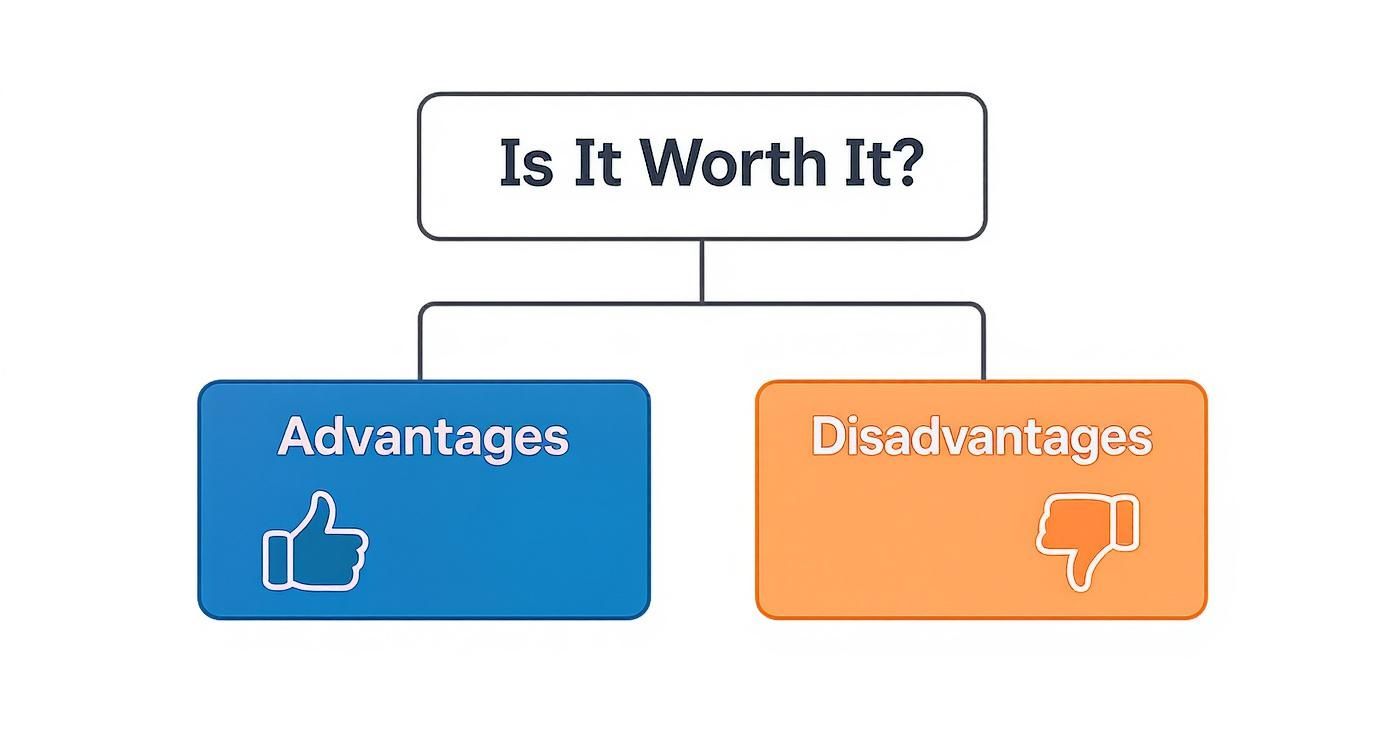
It really highlights that while the program has massive upsides like brand trust, you've got to be prepared for the downsides, like the session-based cookie, which can be a real challenge.
How Your Earnings Compare
It's always helpful to zoom out and see how these numbers fit into the bigger affiliate marketing picture. While a single booking might net you anywhere from $18 to $30, the top travel bloggers are often pushing hundreds of these a month.
For a better look at what's truly possible, check out our guide on how much affiliates make to get a feel for industry benchmarks. At the end of the day, a high volume of referrals is what turns this from a side hustle into a serious income stream.
An Honest Look At The Pros And Cons
No affiliate program is perfect for everyone, and let’s be honest, you need to see both the good and the bad. The Booking.com program has some massive upsides that can seriously grow your income, but it also comes with a few drawbacks that could be total deal-breakers depending on your audience.
Let's break down exactly what you're signing up for.
The Advantages Driving Conversions
The most powerful thing you get is unshakable brand recognition. Booking.com is a global travel giant. When someone in your audience clicks a link, they land on a site they already know and trust. That immediately lowers their guard, making them much more likely to complete a booking. You aren't just pushing a random hotel; you're piggybacking on decades of marketing and goodwill.
This is amplified by the sheer scale of their options. Because Booking.com dominates the market, affiliates get access to an incredible pool of properties. We're talking over 28 million listings across 226 countries. With about 2.5 million room nights booked daily, there's a constant stream of earning potential. The company's gross bookings hit $165.6 billion—the potential is undeniable if you can tap into even a tiny slice of that. You can learn more about Booking.com's massive scale and what it means for affiliates.
Beyond the big name, the program gives you a decent set of tools to work with. You can integrate:
- Search Boxes: These let users search for hotels right from your website, which is a fantastic user experience.
- Deal Finders: You can spotlight special offers and discounts, creating a bit of urgency to get people booking.
- Banners: Simple, visually appealing banners you can drop into sidebars or articles to grab attention.
- Deep Links: This is a big one. You can link directly to a specific hotel, a city, or even a pre-filled search result page, making your recommendations super targeted.
These tools give you a lot of flexibility in how you promote offers, letting you match the promotion to your content and audience.
The Disadvantages You Must Consider
Alright, now for the tough part. The single biggest drawback of the Booking.com affiliate program is its session-based cookie policy. This is a critical point that can't be overstated.
You only earn a commission if a user clicks your link and completes their booking within that same browser session. If they close the tab, get distracted, and come back an hour later to book, you get nothing.
This is a huge departure from other programs that offer 30 or even 90-day cookie windows. It means your content needs to target people with high purchase intent—travelers who are ready to book right now. If your blog is more about inspiring future travel ideas, this policy will kill your earnings.
Another real hurdle is the €100 minimum payout threshold. For big, high-traffic sites, this is no big deal. But if you're a new affiliate or have a smaller audience, it can feel like a long, frustrating wait to get paid. Your earnings will just roll over month after month until you finally hit that magic number, which can be pretty demotivating when you're just starting out.
Finally, you need to know that Booking.com has been changing its strategy lately. They've been actively trimming their roster, cutting smaller, lower-performing affiliates to focus on partners who deliver consistent volume. The pressure is on to perform. If you can't generate a steady stream of stayed bookings, you run the risk of getting dropped from the program. This isn't a "set it and forget it" kind of deal; you have to put in the work to keep your spot.
Booking.com Affiliate Program Pros vs Cons
So, what's the final verdict? It really depends on what you value in a partnership and the kind of audience you have. Here’s a quick side-by-side look to help you decide.
| Pros (Advantages) | Cons (Disadvantages) |
|---|---|
| Massive Brand Trust: Users know and trust the Booking.com name, leading to higher conversion rates. | Session-Based Cookie: Commissions are only paid if the booking is made in the same session. A huge drawback. |
| Huge Inventory: Over 28 million listings mean you can always find relevant properties to promote. | High Payout Threshold: You must earn at least €100 before you can get paid, which can be tough for beginners. |
| Global Reach: Properties in 226 countries make it relevant for almost any travel audience. | High Performance Pressure: The program actively removes underperforming affiliates, so you need to deliver results. |
| Good Promotional Tools: Features like deep links, search boxes, and deal finders offer a lot of flexibility. | Not Beginner-Friendly: The combination of the cookie policy and performance pressure makes it a tough starting point. |
Ultimately, Booking.com can be an incredibly lucrative program if you have an audience that's ready to buy and you can drive consistent bookings. But for creators focused on long-term travel inspiration or those just starting out, the restrictive cookie policy and high payout threshold might make it more trouble than it's worth.
How To Get Started With The Program
Ready to jump in? Signing up for the Booking.com affiliate program is pretty simple, but getting approved isn't a rubber-stamp deal. Unlike some programs that let anyone in, Booking.com is looking for partners who already have an audience. That means you need a quality website, a travel blog people actually read, or a social media presence with some real engagement.
Think of your platform as your resume for this application. Before you even head to their sign-up page, take an honest look at your content. Is it polished? Is it genuinely helpful to travelers? A blog with only a handful of thin posts or an Instagram account with crickets for engagement is a fast track to rejection. They want partners who can send them real, ready-to-book traffic.
The Step-By-Step Application Process
The sign-up itself only takes a few minutes, but don't rush through it. Every field is a chance to make a good impression, so be thoughtful and accurate with your info.
- Head to the Affiliate Partner Page: The first step is to visit the official Booking.com Affiliate Partner Program website. This is where it all begins.
- Fill Out the Registration Form: You'll need to enter the usual stuff—your name, company details if you have them, and the URL for your website or main social media channel.
- Describe Your Platform: This is the most important part of the application. Get specific. Explain your niche, who your audience is, and how you plan to promote Booking.com. "I run a travel blog" is vague. "I create detailed city guides and hotel roundups for solo female travelers in their 30s" is a thousand times better.
- Submit and Wait: Once you hit submit, their team will review your application. This can take anywhere from a few days to a couple of weeks. While you wait, keep creating great content.
Pro Tip: When you get to the part about your promotional methods, talk about the value you'll provide. Mention things like creating hotel review videos, writing "best places to stay in…" listicles, or building itineraries that naturally include booking links. This shows them you actually understand how to convert readers into bookers.
Getting Booking.com Set Up On Your Site
Once that approval email lands in your inbox, it’s time for the fun part: integrating Booking.com's tools and starting to earn. Your affiliate dashboard is your new command center, and it's pretty intuitive, even if you're new to affiliate marketing. If you want a complete rundown of these kinds of strategies, our guide on affiliate marketing for content creators is a great place to start.
Here are the main tools you'll be using:
- Text Links (Deep Links): This is your bread and butter. Instead of just sending people to the Booking.com homepage, create "deep links" that go directly to a specific hotel, a city's search results, or a landmark page. This makes life way easier for your audience and dramatically increases the odds they'll book.
- Search Box Widget: This is a fantastic tool to add to your homepage, sidebar, or within a blog post. It lets your visitors search for hotels right from your website, which is super convenient for them and keeps them on your site longer.
- Banners: Honestly, banners aren't as effective as they used to be, but they can still be useful. Think of them as brand awareness tools. You can place one in your header or sidebar for a bit of extra visibility without getting in your readers' way.
Strategies To Maximize Your Affiliate Earnings
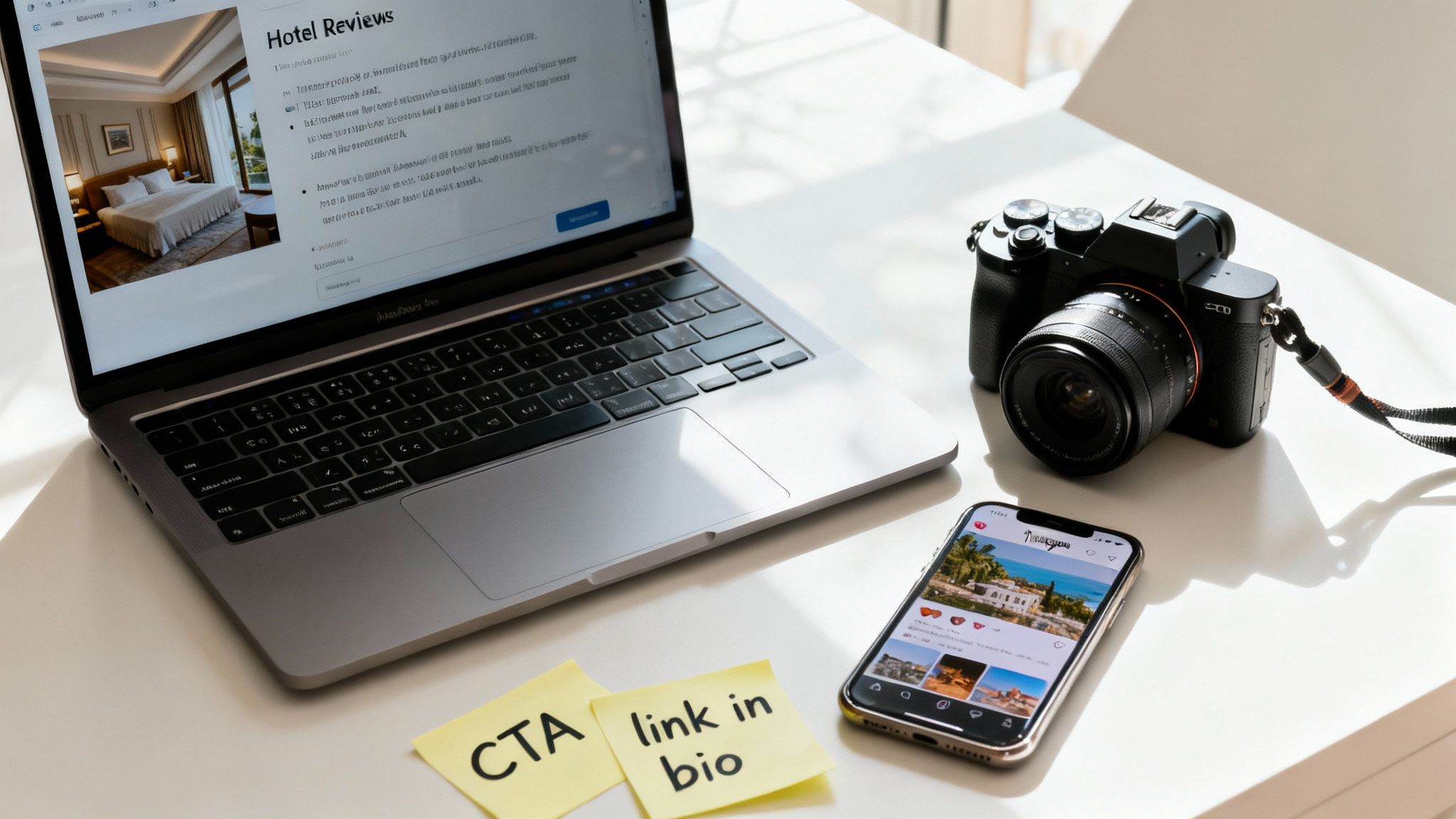
Look, just dropping links into your content isn't really a strategy. It's more like wishful thinking. To actually make money with the Booking.com affiliate program—especially with that session-based cookie—you have to be smarter. Your links need to be a natural part of content that genuinely helps people.
Your goal is to stop passively promoting and start actively solving problems. Your audience is trying to plan a trip, and they've got a ton of questions. Your content needs to be the answer, with your Booking.com links feeling like the obvious, helpful next step.
For Travel Bloggers
As a blogger, your superpower is detailed, SEO-friendly content. This is where you can really dig in and attract people who are ready to book right now.
-
Create "Best Places to Stay" Guides: Don't just write another generic "10 Best Hotels in Paris" post. Get way more specific. Think like a real traveler and target long-tail keywords like "best family-friendly hotels in Paris near the Louvre." This pulls in readers who are past the dreaming stage and are much closer to pulling out their credit card.
-
Write In-Depth Hotel Reviews: If you've actually stayed somewhere, a detailed, honest review is absolute gold. Pack it with your own photos and videos, and don't be afraid to mention the pros and the cons. A review that feels real builds an incredible amount of trust, making it far more likely someone will book through your link on the spot.
-
Build Itinerary-Based Content: Map out a complete "3-Day Itinerary for Rome" that weaves in sightseeing, restaurant tips, and, naturally, accommodation suggestions. By embedding hotel links directly inside a practical travel plan, you’re catching people at the exact moment they're making decisions.
This goes way beyond just the Booking.com program. To build something that lasts, you need to understand the fundamentals of building an affiliate site that actually earns. That knowledge helps you put together a solid content strategy that brings in steady traffic and income over the long haul.
And if you're just getting your feet wet, our guide on how to start a travel blog gives you a complete roadmap for building a platform where these strategies can really work.
For YouTubers and Video Creators
Video is an incredibly immersive way to show off a destination or a hotel room. Your main job is to make it dead simple for viewers to click and book while they're still excited by what they're seeing.
- Optimize Your Video Description: That description box is prime real estate. Put your Booking.com link right at the top so it's one of the first things people see, even before they have to click "Show more." Use a clear call-to-action like, "Book the incredible hotel I stayed at in Tokyo here."
- Use Pinned Comments: Pin a comment that has your most important affiliate links. This makes sure your recommendation stays visible to everyone scrolling through the comments—often the most engaged viewers you have.
- Mention Links in Your Video: A simple verbal cue works wonders. Just say something like, "I've dropped a link to this exact hotel in the description below so you can check prices and availability."
For Instagram and Social Media Creators
On visual platforms like Instagram, the game is all about getting people from your gorgeous photos and videos to a clickable link. Since you can't just toss links in feed posts, you have to get a little creative.
-
Leverage Link-in-Bio Tools: Use a service like Linktree or Beacons. These let you create a simple landing page for all your important affiliate links. Then you can just tell your followers in posts and Stories to "check the link in my bio" to find your hotel picks.
-
Create Engaging Stories: The "link sticker" in Instagram Stories is your best friend here. It lets you send people straight to a Booking.com page. Film a quick video tour of your hotel room, then slap on a sticker that says, "Book this room!" It’s interactive, direct, and incredibly effective.
Riding the Wave: Recent Program Changes and What's Next
The world of affiliate marketing is always shifting, and the Booking.com program is a perfect example. They've recently made a major pivot, making it crystal clear that they're now chasing quality and volume over just signing up tons of partners. This isn't some small policy update; it's a fundamental change in their philosophy, and every affiliate needs to pay attention.
This new direction hit home when Booking.com started cutting ties with thousands of smaller creators. That was the signal: the program is growing up. They're zeroing in on profitability and rewarding affiliates who can bring in consistent, high-value traffic. The days of getting by with just a small travel blog are pretty much over.
The New Rules of the Game
So, what's this mean for you? Simple: performance is everything now. Booking.com is on the hunt for partners who can drive a serious number of stayed bookings, month after month. If you're new to the program, the casual, small-time commission model is likely a thing of the past.
In short, the program just got a lot more exclusive. Booking.com is betting big on high-performing affiliates who treat this like a real business, not a side hobby. To succeed now, you need a laser-focused strategy built around conversion.
This shift changes how you need to think about the program entirely. Your goal isn't just to get in; it's to become an indispensable partner who drives volume. That means really knowing your audience and creating content that speaks to travelers who have their credit cards out, not just their heads in the clouds.
A Clear Focus on High-Value Partners
The decision to trim the affiliate roster wasn't random; it was a calculated business move. As of June 20th, Booking.com dropped partners who weren't hitting a certain commission volume—specifically, those making less than €1,000 per month. While that stung a lot of smaller bloggers, it also solidified the program's value for those who can clear the bar. You can get the full story on these affiliate partnership changes to see the bigger picture.
For the affiliates who make the cut, the program is as attractive as ever. Top-tier partners can get a 30-day cookie duration, a huge leg up that gives your audience more time to book and you more time to earn. This is a clear carrot on a stick, designed to push affiliates to scale up and prove their worth. The future here belongs to creators who deliver the goods and align with Booking.com’s new, performance-first mindset.
Got Questions? I've Got Answers
Even after going through all the details, you probably still have a few things you're wondering about. Let's tackle the most common questions I get about the Booking.com program to help you decide if it's really the right move for you.
What’s the Minimum Payout?
You’ll need to hit €100 in commissions before you can get paid.
If you don't reach that amount in a given month, your balance just rolls over to the next one. It's not a huge deal, but if you're just starting out, it might take a couple of months to actually see that first payment land in your bank account (they pay via bank transfer).
How Does the Booking.com Cookie Work?
This is a big one, and honestly, it’s where Booking.com is a lot stricter than most other programs. They use what’s called a session-based cookie.
So, what does that mean? It means you only get credit if someone clicks your link and books their stay in that same browser session. If they click, look around, close the tab, and come back an hour later to book, you get nothing. Zero.
This setup really rewards content that targets people who are ready to pull out their credit card and book right now.
Can I Slap These Links on Social Media?
Yep, absolutely. Using Booking.com links on your social channels is a solid strategy, and plenty of creators do it well.
- On Instagram: A "link in bio" tool like Linktree is perfect for creating a list of your top hotel picks. Or, if you have the feature, the link sticker in your Stories is even better for direct promotions.
- On YouTube: Drop your affiliate links directly into the video description. I'd also recommend a pinned comment with your most important link to make sure nobody misses it.
- On Facebook: You can share links in travel groups (if the rules allow it!) or on your own page when you're talking about a specific place you stayed.
Just a quick heads-up: always be upfront that you're using affiliate links. It keeps you on the right side of advertising rules and, more importantly, keeps the trust you've built with your audience.
When Do I Actually Get Paid?
Booking.com pays out monthly, but there's a bit of a delay to keep in mind. Your commission isn't officially confirmed until after the guest has checked out of their stay.
Let's say someone clicks your link in January and books a trip for March. That commission will be validated in April (after their stay is complete). Then, you'll get paid for all of April's validated commissions sometime in May, as long as you've hit that €100 minimum.
Ready to turn your passion for affiliate marketing into a real, profitable business? Daniel Proctor provides the step-by-step mentorship and tools you need to succeed. Stop guessing and start building with proven strategies. Learn more and join the academy today!
