


For a lot of affiliates, the Interflora program is a pretty solid bet, mainly because of its powerful brand recognition and huge seasonal demand. The commission rates aren’t exactly groundbreaking, but the high average order value around big holidays like Valentine’s Day and Mother’s Day means there’s serious earning potential here.
Is The Interflora Affiliate Program Worth Your Time

So, let’s get straight to it. When you’re looking at any affiliate program, the real question is simple: can it actually make you money? With Interflora, the answer really depends on your audience and how you plan to promote them.
This isn’t just some random flower shop. Interflora has been around for over 70 years, building a name that people trust globally. That makes your job a whole lot easier. You’re not trying to sell a new, unknown product; you’re promoting a household name that people already associate with quality and getting flowers delivered on time.
Before we dive into the nitty-gritty of the full review, this section gives you the quick verdict by breaking down the most important metrics. Success in any affiliate program, though, comes down to solid fundamentals. You can learn more about those by checking out these proven strategies for growing an online business.
Think of the table below as your cheat sheet—a quick way to see if Interflora fits with what you’re trying to do.
Interflora Affiliate Program Key Metrics at a Glance
This table breaks down the essentials of the Interflora affiliate program at a glance. It’s designed to give you a quick summary of the most critical factors to help you decide if it’s the right fit for your business.
| Metric | Details | Why It Matters for Affiliates |
|---|---|---|
| Commission Rate | Typically 5-8%, with promotional boosts up to 20% on select items. | The base rate is pretty standard for the flower industry, but the real money is in the high average order values and juicy seasonal promotions. |
| Cookie Duration | 30 days on most networks. | A 30-day window is generous. It gives your audience plenty of time to click your link and make a purchase, and you still get the credit. |
| Brand Strength | Extremely high global recognition. | A famous brand means instant trust. That translates to higher conversion rates with a lot less effort needed from you to convince your audience. |
| Ideal Affiliate | Lifestyle bloggers, gift guide creators, and holiday-focused content publishers. | This program is a goldmine for anyone who can naturally weave gift-giving and special occasions into their content calendar. |
Ultimately, these metrics show a program with a solid foundation. The combination of a trusted brand and strategic earning opportunities during peak seasons makes it a compelling option, especially for the right kind of publisher.
Understanding Interflora’s Commission Structure And Payouts
When you’re sizing up any affiliate program, the commission structure is what really matters. It’s the part that decides how much cash you can actually make, so you need to get into the details to figure out your potential profits and map out a game plan.
Interflora doesn’t just hand out a single, flat commission rate. It’s a bit more complex than that. Your earnings can change a lot depending on which affiliate network you’re on, the country you’re promoting to, and even what kind of product someone buys. This means you’ve got to look past the headline numbers.
Breaking Down The Commission Rates
At a glance, Interflora’s commissions usually hang out in the single-digit to low double-digit range. For example, if you look at their partner page in Poland, they keep it simple with a straight 7% commission on every single paid order. That gives you a nice, clear baseline to work with.
But it often gets more interesting—and more profitable. A lot of Interflora programs, especially on the bigger networks, use tiered or category-based commissions. You might start with a base rate of 5.6% for a standard bouquet, but that could leap to 20% during a big sale or for specific items like luxury gift hampers.
These shifting rates are a massive part of what makes the Interflora program tick. For a smart affiliate, this is a huge opportunity. If you can line up your content with their high-commission products and seasonal deals, you can really clean up. You can see how these differences play out in my full Awin affiliate network review, where I break down how the platform itself can affect your earnings.
The Power Of Seasonality And High AOV
That commission percentage is important, no doubt. But it’s only telling you half the story. The real money with Interflora comes from their high average order value (AOV) and the insane sales spikes that happen around holidays. People aren’t just sending a small bunch of carnations; they’re often buying big, fancy arrangements, adding on chocolates or vases, and splurging on premium bouquets for special occasions.
This is where seasonality becomes your best friend, multiplying your earnings like crazy. Just think about the massive demand during key times of the year:
- Valentine’s Day: A global frenzy for romantic flowers.
- Mother’s Day: Easily one of the biggest flower-buying days of the entire year.
- Christmas and Easter: Super popular for sending festive arrangements and table centerpieces.
During these peaks, even a standard commission rate can bring in some serious cash simply because of the huge number of high-value orders flying out the door.
A crucial piece of the puzzle here is how well Interflora handles these insane rushes. For instance, in the lead-up to Mother’s Day, they hit an incredible 95.4% net acceptance rate across their European markets. That number means a ton of orders were successfully processed, which translates directly into more commissions for people like us. You can read more about how they pulled that off over at Checkout.com.
At the end of the day, winning with the Interflora affiliate program isn’t just about chasing the highest percentage. It’s about playing it smart—combining their generous 30-day cookie window, high AOV, and the predictable holiday rushes to truly maximize what you get paid.
Digging into Traffic Potential and Conversion Strength
Sending clicks to a merchant’s site is the easy bit. The real work—and where the money is made—is getting that traffic to actually buy something. To really get a feel for the Interflora affiliate program, we need to look past the commission rates and size up two crucial things: how many people are visiting their site and how good Interflora is at turning those visitors into customers.
It’s like picking a spot for a retail store. You want a storefront on a packed street (that’s your high traffic) that’s also amazing at convincing people to come inside and spend money (that’s your high conversion). Interflora nails both, which is a powerful combo for any affiliate. Their brand isn’t just a name; it translates directly into a massive, ready-to-buy audience you can tap into.
Gauging the Scale of the Opportunity
A well-known brand naturally pulls in a lot of visitors, which is the bedrock of any solid affiliate partnership. A quick look at third-party analytics shows just how big Interflora’s audience really is. For its UK site alone, monthly visits are often in the hundreds of thousands. Take November, for example, when traffic can easily hit the 450,000–500,000 visit range, with over 80% of those people coming from right within the UK.
This tells us there’s a huge, engaged customer base that’s ready to spend, especially around major holidays and gifting seasons. As an affiliate, this means you’re not sending your audience to some obscure website; you’re pointing them toward a trusted brand that can handle a serious amount of sales.
The money behind the traffic is just as impressive. Retail data models put Interflora’s UK online revenue at around US$107 million a year. A busy month like November can bring in roughly US$9 million on its own. These numbers show a massive gross merchandise volume (GMV), and that’s the pie that affiliate commissions are cut from.
Turning Clicks into Cash
Lots of traffic is great, but it’s the conversion rate that really dictates what you’ll earn. And this is where Interflora really delivers. Retail analytics data estimates Interflora’s on-site conversion rate is a very solid 6.0–6.5%. This is a key number you can use to ballpark your own potential success.
Let’s break that down with a real-world example. Say your promotional efforts drive 10,000 clicks to Interflora’s website.
- With a 6% conversion rate, that traffic should realistically generate about 600 sales.
- Multiply those 600 orders by whatever the average order value (AOV) is.
- Then, just apply your commission percentage to that total.
This simple math gives you a concrete way to forecast your earnings and see the direct financial impact of your campaigns. You can take a deeper dive into these traffic and conversion metrics to see the full picture. Honestly, this combination of massive traffic and strong on-site performance is a big reason why reviews of the Interflora affiliate program often point to its reliability for generating steady income.
How Interflora Stacks Up Against Other Flower Affiliate Programs
You can’t really judge an affiliate program in a vacuum. To get a true sense of what Interflora is offering, you have to see how it compares to the other big names in the flower and gift delivery game. This is where you find out if it’s a market leader or just another middle-of-the-pack option.
Let’s be honest, the floral affiliate world has its quirks. You’re typically looking at modest commission rates, cookie windows that matter a lot, and massive seasonal spikes. Knowing this helps set the right expectations from the start. Most of the major flower companies offer commissions somewhere in the 5–10% range, with cookie durations lasting from 10 to 45 days.
Based on that alone, Interflora’s program lands squarely in familiar territory. It’s pretty much the industry standard. If you want a broader view of where this fits in the grand scheme, it’s worth checking out some of the best affiliate marketing programs across all niches.
Benchmarking Against The Competition
While you might find a few niche or luxury gift brands offering crazy rates up to 20%, Interflora’s typical 5–7% commission is what you should expect. They might boost it during peak seasons, but it’s not a top-tier earner on percentage alone.
But here’s the thing: Interflora’s real strength isn’t its commission rate. It’s the massive brand recognition and ridiculously high on-site conversion rates. That’s the secret sauce that often makes up for a slightly lower percentage.
This infographic gives you a rough idea of how Interflora’s traffic volume can translate into actual sales for affiliates.
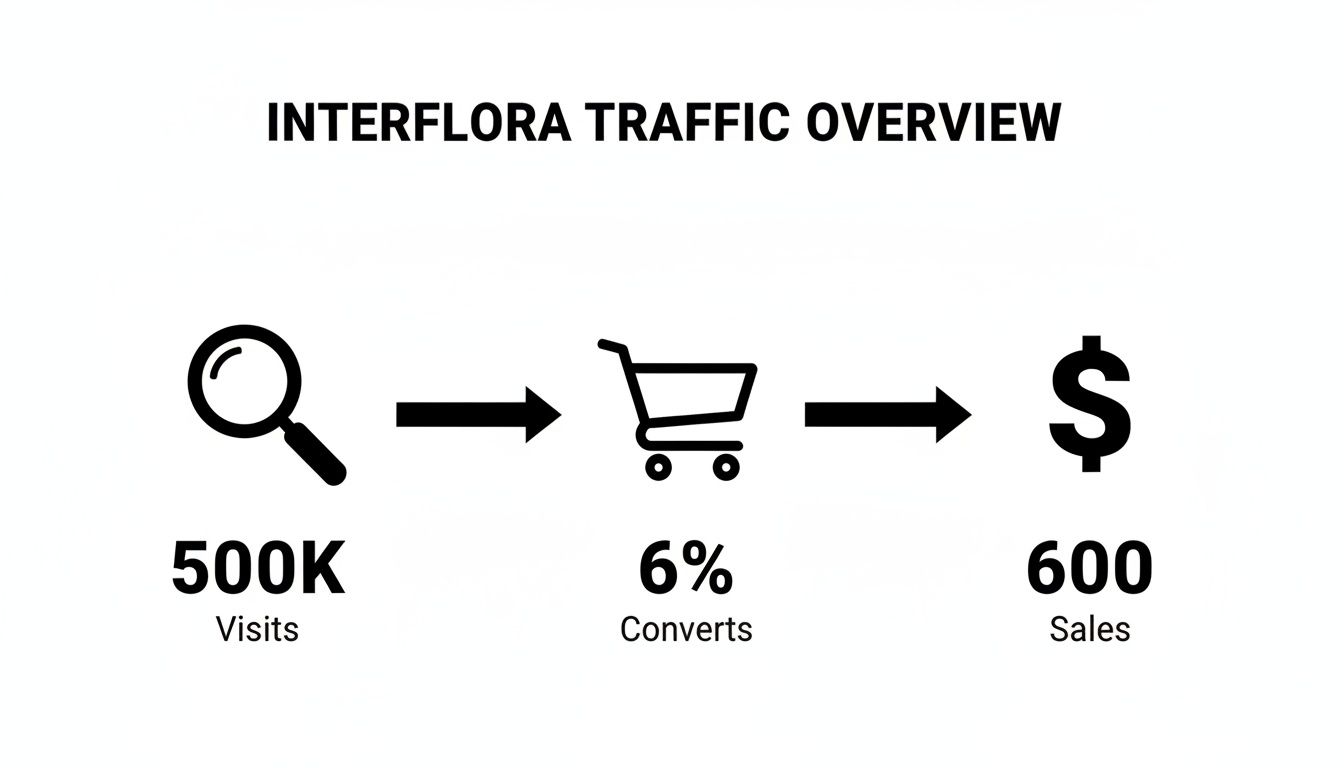
The lesson here is simple: a trusted brand that’s good at turning clicks into cash can be a goldmine.
Here’s the big takeaway for any affiliate: the raw commission percentage is only half the story. A program with a 15% commission that only converts at 1% will make you less money than a program like Interflora’s, which might offer 7% but converts at 6%. Your effective earnings per click (EPC) are often much, much higher with a trusted brand that people are ready to buy from.
Interflora vs. Competitors Affiliate Program Comparison
To put things into perspective, let’s look at a side-by-side comparison. This table breaks down how Interflora stacks up against a major competitor and a smaller, more niche brand on the metrics that actually matter.
| Feature | Interflora | Competitor A (e.g., FTD/ProFlowers) | Competitor B (Niche Brand) |
|---|---|---|---|
| Commission Rate | 5-7% (with seasonal boosts) | 6-10% | 10-15% |
| Cookie Duration | 30 Days | 14-30 Days | 45-60 Days |
| Brand Recognition | Very High (Household Name) | High | Low to Medium |
| Conversion Rate | High (Trusted Brand) | Medium-High | Varies (Lower traffic) |
| Product Range | Wide (Flowers, Plants, Hampers) | Very Wide (Similar Offerings) | Specialized (e.g., eco-friendly) |
| Best For | High-traffic sites, gift guides | Comparison sites, US-focused traffic | Niche blogs, targeted audiences |
As you can see, Interflora holds its own. While a niche brand might offer a higher commission, you’ll likely struggle to get the same volume of sales due to lower brand trust and awareness. Interflora provides a balanced, reliable option.
Understanding Your Earning Potential in This Niche
The really successful affiliates in the floral space don’t stick to just one program. They build high-traffic content around seasonal peaks—think “best Valentine’s Day flowers” or “Mother’s Day gift guides”—and promote a mix of brands.
During those key holidays, a well-positioned affiliate can pull in anywhere from $2,000 to $10,000+ per month. They do this by combining a powerhouse like Interflora with other programs to cover all their bases. If you’re just getting started, our guide to the https://danielproctor.com/best-affiliate-programs-for-beginners/ is a great place to find more options.
When you look at the whole picture, Interflora is a solid, dependable choice. It might not pay the highest percentage, but its brand power and conversion strength make it an essential part of any serious gift-focused affiliate strategy.
Proven Strategies To Maximize Your Interflora Commissions

Look, success with the Interflora affiliate program isn’t about just slapping a banner on your site and hoping for the best. To actually see those commissions roll in, you need a smart playbook. You have to get inside the head of your audience and figure out what they’re searching for and, more importantly, when they’re ready to buy.
This means shifting your mindset from just promoting to actually helping. Think of yourself as the go-to guide for gift-giving. Your content needs to solve a real problem for someone, whether they’re scrambling for a last-minute anniversary gift or trying to find the right sympathy flowers. The more specific and helpful you are, the more your conversions will climb.
Crafting High-Converting Content
If you’re a blogger or content creator, your entire strategy should be built on SEO-optimized gift guides. These articles are gold because they attract people who are already in buying mode. Forget about broad topics; you want to drill down into niche, long-tail keywords that match what people are actually typing into Google.
Here are a few content ideas that work really well:
- Occasion-Based Guides: Think “Best Last-Minute Anniversary Flowers” or “Top Bouquets for a Get Well Soon Gift.”
- Location-Specific Content: Something like “Same-Day Flower Delivery in Melbourne” can capture that valuable local search traffic.
- Product Reviews: Write an honest review of a specific Interflora bouquet. Even better, take your own photos or shoot a quick video.
For video creators, a walkthrough of the Interflora ordering process is a great angle. Show how simple it is to send flowers to someone in Australia, even if you’re overseas. This kind of content builds trust and makes the whole process less intimidating for a potential customer. Unboxing videos of popular arrangements are also fantastic for showing off the quality firsthand.
Your goal is to become the trusted resource for anything related to sending flowers and gifts. When a reader trusts your advice, they’re way more likely to click your affiliate link and buy without a second thought.
Aligning Your Content with Seasonal Peaks
The real secret to making big money here is planning your content around major holidays. These seasonal spikes can make up a massive chunk of your yearly affiliate income. You need to start publishing your holiday content weeks—or even months—ahead of time to get it ranking in search engines and capture all the early birds.
A well-thought-out content calendar means you’re always ready for these waves of motivated buyers.
Key Promotional Periods:
- Valentine’s Day (February): Get your gift guides and romantic bouquet ideas out in early January.
- Mother’s Day (May): This is often the biggest sales event of the year. Focus your content on “Best Flowers for Mom” and compare different gift hampers.
- Christmas & New Year (December): Create content around festive arrangements, table centerpieces, and even corporate gifting ideas.
But don’t just focus on the big ones. Anniversaries, birthdays, and sympathy occasions happen all year round. By consistently creating relevant content, you can build a steady, reliable stream of traffic and commissions. If you really want to pour fuel on the fire, combine this with a targeted email list. Check out our guide on email marketing for affiliates to see how you can nurture your audience and convert them directly. This approach turns those seasonal spikes into predictable, year-round revenue.
The Pros And Cons: An Honest Assessment
Look, no affiliate program is perfect. To give you a real, boots-on-the-ground review of Interflora’s program, we have to look at both the good and the bad. Knowing what you’re getting into helps you set the right expectations and build a strategy that actually works.
The absolute biggest win here is Interflora’s massive global brand recognition. With a history stretching back over 70 years, you’re not promoting some unknown startup. You’re promoting a household name people already know and, more importantly, trust. This built-in credibility is a huge advantage and does a lot of the heavy lifting for you, seriously boosting your conversion rates.
Then there’s the predictable seasonality. This is a business model that runs like clockwork. You can bank on huge earning spikes around major holidays like Valentine’s Day and Mother’s Day. This makes planning your content and ad campaigns months in advance a no-brainer, letting you maximize your impact when it counts.
Navigating The Program’s Challenges
On the flip side, there are a few things you need to be aware of. The commission rates aren’t exactly the highest in the game. Yes, the high average order value helps soften the blow, but you’ll find niche competitors offering more generous percentages. This means you need to think in terms of volume—it’s about getting a lot of sales, not just a few high-ticket ones.
That brings us to the next big hurdle: the competition is fierce. When those peak holidays roll around, the affiliate space gets incredibly crowded. Just throwing up a few links won’t cut it. To stand out, you’ll need a solid SEO plan, creative content angles that nobody else is using, and an audience that already trusts your recommendations.
One final thing to keep in your back pocket is the regional differences. The program’s terms can change depending on where you are. The commission structure, the creatives you get, and even the promotional rules might be different for the UK program versus the Australian one, for example. You’ve got to pay close attention to make sure you’re playing by the right rules and optimizing for the correct market.
At the end of the day, Interflora offers a solid, reliable opportunity that converts well because of that deep brand trust. Your success will really come down to your ability to drive a ton of traffic during those key seasons and being realistic about the industry-standard commission rates.
Got Questions? I’ve Got Answers
Jumping into a new affiliate program always brings up a few questions. It’s totally normal. Here are the straight-up answers to the most common things people ask about the Interflora program, so you can get started without any guesswork.
How Do I Apply to The Program?
Getting your application in is pretty simple because Interflora uses major affiliate networks to manage everything. Which network you use will likely depend on where you are in the world.
The two main players are:
- Awin: This is the go-to if you’re targeting the UK or European markets. A massive network with tons of brands.
- Commission Factory: Your best bet if your audience is in Australia or the wider Asia-Pacific region.
You’ll need an account with one of these networks first. Once you’re in, just search for “Interflora” in their list of advertisers and hit apply. They’ll usually take a look at your website or social media to make sure your content is a good fit and that your audience is a match for their brand.
Are There Any Big Rules I Should Know About?
Yes, and this one is a deal-breaker, so pay attention. The biggest rule you absolutely cannot break is brand bidding.
What does that mean? It means you are strictly forbidden from bidding on keywords like “Interflora,” “Interflora flowers,” or anything similar in your paid ad campaigns on Google Ads or other search engines.
Pretty much every affiliate program has this rule. They don’t want to compete with their own affiliates for ad space. If you break this, you’ll likely lose your commissions and get kicked out of the program. Seriously, always read the terms and conditions when you join.
What’s The Payout Process Like?
Interflora itself doesn’t handle the payments. It’s all managed by the affiliate network you signed up through, like Awin or Commission Factory.
Each network has its own way of doing things, but it’s usually pretty standard. For example, Awin tends to pay out twice a month, but only after you’ve hit their minimum payout amount (which might be something like £20 or $25).
When you first make a sale, the commission will show up as “pending.” This gives them time to make sure the order isn’t canceled or returned. Once everything is confirmed and approved, the commission becomes payable, and you’ll get it on the network’s next scheduled payday.
Ready to turn your content into a real affiliate business? At Daniel Proctor, I provide the mentorship, tools, and step-by-step training to help you get there. Learn how to build your affiliate income with my proven strategies.
