

When you’re a creator weighing up fashion partnerships, the Kate Spade affiliate program pops up for good reason. It’s got that killer brand recognition, sure, but the real meat is in the commission structure. We’re talking rates up to 10.5% on full-price items and a massive 21% on outlet collections. That’s enough to make anyone pay attention, though it’s tempered by a pretty tight 7-day cookie window.
Is The Kate Spade Affiliate Program Your Next Big Win?
Before diving headfirst into any partnership, you need to look at the numbers that will actually hit your bank account. For any affiliate, this boils down to three core things: the commission rate, the cookie duration, and the brand’s average order value (AOV). Think of it like a three-legged stool—if one leg is wobbly, the whole thing is unstable. A huge commission rate is great, but it won’t mean much if the cookie window is too short for your audience’s buying cycle or if people are only spending a few bucks per order.
This quick gut check is your litmus test. It lets you see if the program’s foundation actually works with your content style and what you’re trying to earn before you sink a bunch of time into applying. A mismatch here means you could end up promoting products for a return that just isn’t worth the effort.
A Snapshot of Your Earning Potential
To really get a handle on it, let’s break down the key details. The commission rate is your cut of a sale. The cookie duration is the timeframe you get credit for that sale after someone clicks your link. And the AOV gives you a clue about how much people typically spend. All three have to work together to make a program profitable for you.
The affiliates who really succeed don’t just chase the highest commission percentage. They understand how that percentage, the cookie length, and the average order size all combine to create a reliable income stream.
Knowing these figures helps you set realistic goals. For instance, Kate Spade has a solid AOV, meaning even a single sale can net you a decent commission. But that 7-day cookie demands a content strategy that gets people to buy sooner rather than later. This is where it helps to understand the difference between affiliate marketing vs influencer marketing, because each one requires a totally different promotional mindset.
To make it simple, here’s a quick summary of what you’re looking at with the Kate Spade affiliate program.
Kate Spade Affiliate Program At A Glance
This table breaks down the essential program details every affiliate should know before signing up.
| Metric | Typical Details |
|---|---|
| Commission Rate | Up to 10.5% (Full-Price) | Up to 21% (Outlet) |
| Cookie Duration | 7 Days |
| Average Order Value (AOV) | Moderate to High (Varies by product) |
| Primary Networks | Rakuten Advertising, Mavely |
This gives you a clear, at-a-glance view of the program’s core mechanics so you can decide if it’s the right fit for your audience and goals.
Decoding The Program Terms For Smarter Promotions
Jumping into an affiliate program without reading the fine print is like trying to bake a cake without a recipe. You might get lucky, but you probably won’t. This is where savvy affiliates get an edge—by really digging into the details of the Kate Spade affiliate program.
Understanding these terms isn’t just about following rules. It’s about building a smarter, more profitable strategy from the ground up. The numbers dictate everything, from how much you can make per click to what kind of content will actually convert.
Think of it like this: commission rates are your potential speed, the cookie duration is your runway, and the average order value (AOV) is the weight of the plane. You need to understand how they all work together to get your earnings off the ground.
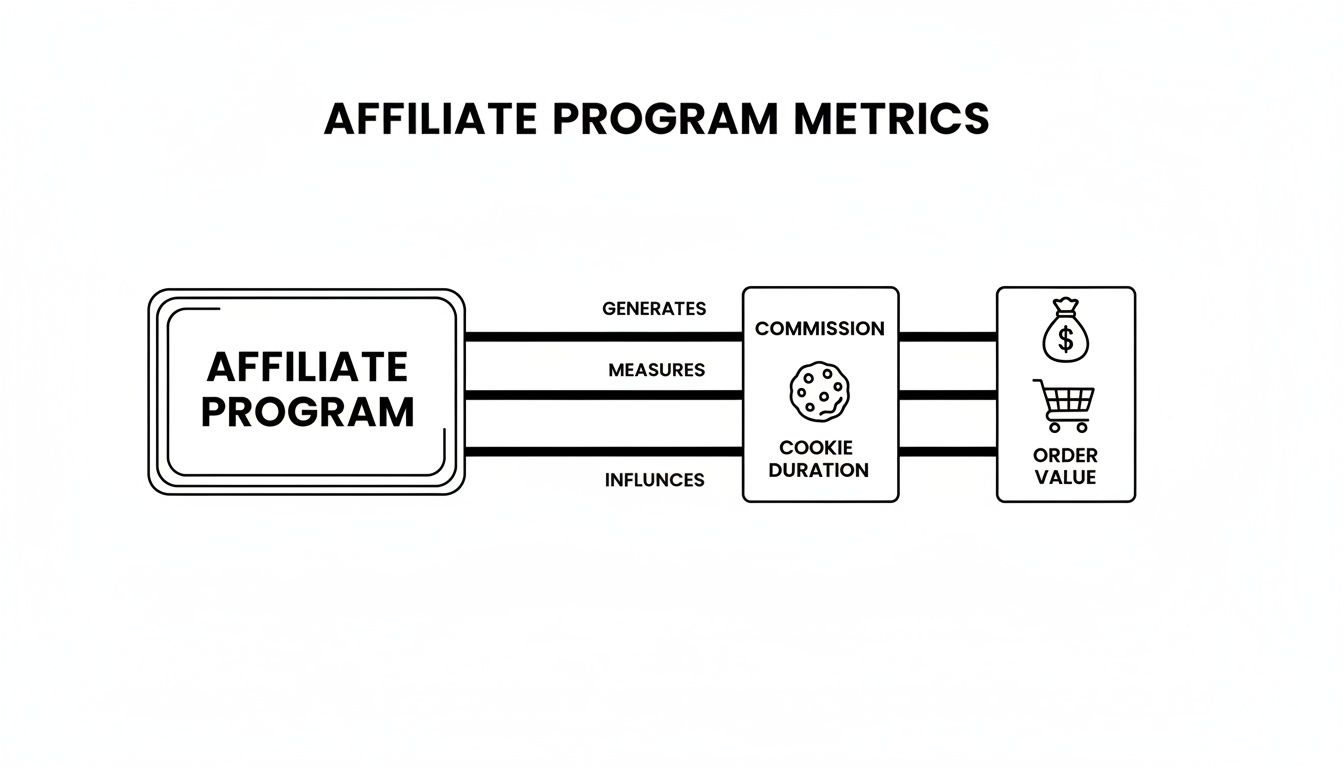
This map shows exactly how those key pieces—commission, cookie window, and order value—connect to determine your final payout.
The Two-Tier Commission Strategy
One of the smartest parts of the Kate Spade program is its split commission structure. You’re not stuck promoting just one type of product; you have two very different paths to earning, which lets you cater to different audiences.
- Kate Spade New York (Full-Price): When you promote the main, full-price brand, you can earn up to 10.5% in commissions. These are the higher-ticket items that attract shoppers looking for luxury and willing to pay for it.
- Kate Spade Outlet: This is where things get really interesting. Promoting the outlet collections can net you up to a whopping 21% commission. The order value might be lower, but the higher rate combined with a deal-hungry audience can mean more sales, more often.
This dual structure is a huge advantage. You can write a blog post about “investment handbags” for the full-price buyer one week, and then create an Instagram story roundup of “outlet finds under $100” the next. It gives you the flexibility to capture sales from both ends of the market.
Navigating The 7-Day Cookie Window
The 7-day cookie duration is a big one. It’s a tight timeline that absolutely has to influence your content strategy.
Imagine a reader clicks your link on a Tuesday to check out a new wallet. For you to get paid, they have to buy it by the following Monday. If they wait until day eight, you get nothing—even if your review is what sold them on it.
This short window means your content needs to create urgency and push for a quick decision. Think flash sale announcements, limited-time offers, and “last chance to buy” posts. These tactics work wonders with a 7-day cookie.
A longer, 30-day cookie would favor more research-heavy, evergreen content. But with Kate Spade, your goal is to turn that initial click into a sale within one week. It’s less “add to your vision board” and more “add to your cart… now.”
Forecasting Your Potential Earnings
To treat affiliate marketing like a real business, you need to be able to predict your income. The trick is to connect the program’s metrics (commission, AOV) with your own platform’s data (traffic, conversion rate).
Let’s look at some numbers for context. Affiliate directories show that the Kate Spade Outlet alone generates around $190.6 million in annual sales, with an average order value of about $50.62. These stats tell you there’s massive sales volume in the outlet category, even if individual purchases are smaller. That 21% commission starts looking pretty powerful when you factor in that kind of volume.
The entire program runs through major affiliate networks like Rakuten, which handle all the tracking, reporting, and payments for you. If you’re new to these big platforms, it’s worth getting familiar with how they work. Our in-depth Commission Junction (CJ) Affiliate program review is a great place to start, as it gives you a solid feel for how these network dashboards operate—knowledge that’s useful for any serious affiliate.
A Step-By-Step Guide To Joining The Program

Trying to get into a top-tier affiliate program can feel a bit like a job interview for your brand. To give yourself the best shot with Kate Spade, you can’t just wing it. You need a clear game plan. This walkthrough will take you through the whole process, from finding the right network to putting together an application that actually gets a “yes.”
First things first, you need to find where the program lives. Kate Spade doesn’t run its program directly; instead, it partners with major affiliate networks like Rakuten Advertising and Mavely. Think of these networks as the big marketplaces where brands and content creators like us connect. You’ll have to sign up for an account on one of them to even get started.
Once your network account is all set up, just search for the Kate Spade program in their directory of advertisers. This is where you’ll find the application form—your one chance to make a killer first impression.
Creating A Winning Application
Don’t treat your application like just another form to fill out. It’s your pitch. The program managers on the other side are looking for partners who genuinely fit the chic, playful Kate Spade vibe and can drive real sales. Here’s what you need to nail to stand out.
- Describe Your Platform: Be super clear about what your blog, YouTube channel, or Instagram account is all about. Get specific with your niche—are you focused on affordable luxury, workwear style, or seasonal gift guides? Describe who your audience is in detail.
- Showcase Your Value: It’s not enough to say you have followers. Explain how you actually engage with them. Share your monthly traffic, social media engagement rates, or any other numbers that prove you have a real, breathing audience that pays attention to what you say.
- Explain Your Promotional Strategy: This is a big one. Tell them exactly how you plan to promote Kate Spade. Are you going to create dedicated reviews? Weave products into your holiday gift guides? Film “style with me” videos? The more specific you are, the better.
A lazy, generic application is the fastest ticket to the rejection pile. They want to see you’ve actually thought about how this partnership is going to work for both of you.
What Program Managers Look For
Getting approved isn’t always about having the biggest numbers; it’s about being the right fit. While a huge following never hurts, a brand like Kate Spade cares deeply about quality and brand alignment.
An affiliate with a smaller, super-engaged audience of fashion lovers is often way more valuable than one with a massive, generic following. It’s about getting the right eyes on your content, not just the most.
Before you even think about hitting that “submit” button, do a quick audit of your own platform. Focus on these key areas to make sure you meet their standards:
- Professional Website Design: Your site should look clean, be easy to get around, and not be cluttered with a million ads or broken links.
- High-Quality Content: Your posts, photos, and videos should have a polished, professional feel that lines up with the Kate Spade aesthetic.
- Consistent Posting Schedule: An active, updated platform shows you’re a serious creator who is consistently giving your audience fresh content.
- A Clear Niche: Your content should have a clear focus that makes sense for luxury, fashion, or lifestyle products.
By getting your own house in order and submitting a thoughtful, detailed application, you seriously boost your odds of getting accepted. Take the time to show them you’re the valuable partner you know you are.
Strategies That Turn Clicks Into Commissions

Just having a Kate Spade affiliate link is like owning a fishing rod without any bait. It’s a tool, sure, but it won’t catch anything by itself. The real magic is in creating content that doesn’t just grab your audience’s attention but actually makes them want to click and buy. This takes a bit of strategy, tailored to your platform and the people who follow you.
Generic promotions are just noise. To actually turn those clicks into cash, you have to do more than just drop a link. It’s about weaving Kate Spade products into stories that connect with your audience’s style, needs, and aspirations. Your content has to feel genuine, valuable, and perfectly timed.
Master SEO With Targeted Blog Content
For bloggers, SEO is your absolute best friend. Your mission is to get in front of people who are already hunting for what Kate Spade sells. You need to think like your ideal customer: What are they typing into Google? Then, you create content that answers that exact question.
This is where you build real, long-term passive income. A well-optimized blog post can keep pulling in traffic and making sales for months, or even years, after you first hit publish.
Here are a few high-converting blog post ideas that just plain work:
- In-Depth Product Reviews: Go way beyond the official product description. Grab a specific bag, like the “Kate Spade Knott Tote,” and really break it down. Talk about the material, its actual size, what you can realistically fit inside, and how it handles daily wear and tear. Your own high-quality photos here are non-negotiable for building trust.
- Seasonal Gift Guides: These are absolute gold, especially around the holidays. Think “The Ultimate Mother’s Day Gift Guide” or “Chic Valentine’s Day Gifts She’ll Actually Love,” and naturally feature Kate Spade jewelry, wallets, or bags.
- “Best Of” Listicles: Pull together curated lists for specific needs, like “The 5 Best Work Totes for Professional Women” or “Our Favorite Crossbody Bags for Travel.” These articles attract readers who are already in a buying mindset.
Drive Action With Engaging Video Content
Platforms like YouTube and TikTok are all about authenticity and visual storytelling. Your audience wants to see the products in your hands, feel your honest excitement, and get a true sense of what they’re buying. Your personality is your biggest asset here.
Video shows off the texture, scale, and function of a product in a way that static photos just can’t. It’s the perfect way to build that personal connection that gets people to take action right away.
Try these video concepts to get things moving:
- Authentic Unboxing Videos: Capture your real, unfiltered first impressions as you open up a new Kate Spade purse. Show the packaging, the feel of the leather, and all the little details. An honest reaction builds a ton of trust.
- “Style With Me” or “Lookbook” Videos: Show how to style a single Kate Spade bag three different ways—one for work, one for a casual weekend, and one for a night out. This shows off its versatility and helps viewers justify the price tag.
- “What’s In My Bag” Content: This is a classic for a reason—it works. It gives a practical look at a handbag’s capacity and organization while subtly promoting the bag itself.
Convert Followers With Compelling Social Media Tactics
On Instagram, it’s all about creating scroll-stopping visuals that drive clicks without feeling like a cheesy ad. Your entire aesthetic needs to match Kate Spade’s chic, playful vibe. This is where you can lean into trends and create a little bit of urgency.
The best social media affiliates don’t just post product pics; they create a lifestyle their followers want to be a part of. When you seamlessly fit Kate Spade into that lifestyle, the promotion feels less like a sales pitch and more like a recommendation from a trusted friend.
Beyond the basics, true success comes when you learn how to monetize your Instagram account and convert followers into cash with smart content.
To really make an impact on social, use the platform’s own tools to your advantage.
- Instagram Reels and TikToks: Make short, snappy videos showing off a new arrival or highlighting a flash sale. Jump on a trending audio clip to boost your reach.
- Interactive Instagram Stories: Use polls (“Which color do you like best?”) and question stickers (“Ask me anything about this bag!”) to get your audience talking right before you share an affiliate link.
- Strategic Email Marketing: Don’t sleep on your email list. It’s a direct line to your most dedicated followers. Weaving affiliate links into a weekly newsletter or a special “deal alert” email can drive a surprising number of sales. If you need some pointers, our guide on email marketing for affiliates has some great, actionable strategies.
This multi-platform approach ensures you’re building a real community that trusts what you say, which leads to much more consistent and meaningful affiliate earnings.
The Pros And Cons Every Affiliate Should Know
Look, no affiliate program is perfect for everyone, and anyone giving you a real kate spade affiliate program review needs to be honest about both sides of the coin. Partnering with a brand like this isn’t just about grabbing a few links; it’s a strategic move. You have to weigh the serious upside against the potential headaches to see if it actually makes sense for your content and your audience.
Think of it like adding a new star player to your team. You see their amazing stats—the killer brand recognition and gorgeous products—but you also have to be real about their weaknesses, like a short cookie window or a crowded field. Getting that balanced view is the only way to make a smart call that helps your business down the road.
Let’s break down what works and what doesn’t.
Weighing The Kate Spade Partnership
To give you a clear picture, here’s a balanced look at the key advantages and potential drawbacks for creators promoting Kate Spade.
| Key Advantages (Pros) | Potential Drawbacks (Cons) |
|---|---|
| Instant Brand Recognition: You don’t have to sell the brand, just the product. | Short 7-Day Cookie: Creates pressure for immediate conversions. |
| High Average Order Value: Luxury items mean bigger commission checks. | Fierce Competition: The fashion niche is crowded with other affiliates. |
| Strong Gifting Appeal: Predictable sales spikes around holidays. | Requires High-Value Content: Simply posting links won’t cut through the noise. |
| Generous Commission Rates: Up to 21% on outlet items is a huge plus. | Less Ideal for “Slow Burn” Content: Not great for long-form, evergreen decision-making. |
This table sums it up nicely. The program offers fantastic earning potential, but it demands a specific, fast-moving promotional strategy to really make it work.
The Clear Advantages Of The Partnership
The biggest pro here is the brand itself, plain and simple. Kate Spade is a global powerhouse with a fiercely loyal customer base. You won’t waste a single second explaining who they are; your audience already gets it. They probably already love them.
That built-in brand equity does a ton of heavy lifting for you. When you feature a Kate Spade bag, you’re tapping into decades of marketing and a rock-solid reputation for style. This builds instant trust and smooths over the friction that often stops a potential buyer from clicking your link.
Another huge plus is how well the products sell, especially for gifts.
- High Average Order Value: With luxury handbags and accessories, a single sale can land you a very nice commission.
- Strong Seasonal Demand: Kate Spade is a go-to for major holidays like Christmas, Mother’s Day, and Valentine’s Day. You can pretty much count on those sales spikes.
- Dual Commission Structure: Earning up to 10.5% on full-price items is great, but getting a massive 21% on outlet collections? That gives you incredible flexibility to promote to different budgets.
This mix of a beloved brand and a high-converting product line creates a powerful foundation for earning real money.
The Potential Drawbacks To Consider
On the flip side, there are some real challenges you need to know about before jumping in. The most glaring one is the 7-day cookie duration. That short window means you have a very limited time to get credit for a sale after someone clicks your link.
This timeline is built for content that inspires quick action—think flash sale announcements or limited-time deals. It’s not so great if you rely on long-form, evergreen content where a reader might think about a purchase for a few weeks. If your strategy is all about the slow burn, you’re going to lose commissions.
The 7-day cookie isn’t a deal-breaker, but it demands a specific strategy. You must create a sense of urgency to convert clicks within that tight timeframe, or your efforts may not pay off.
On top of that, the fashion and luxury accessory space is brutally competitive. You’re not going to be the only creator out there promoting Kate Spade. To stand out, your content needs to be truly special. You have to offer unique styling tips, detailed reviews, or a personal angle your audience can’t find anywhere else. Just posting a product photo with a link won’t be nearly enough to grab sales in such a crowded market. You have to bring genuine value to cut through the noise.
What To Realistically Expect For Payouts And Earnings

It’s easy to get excited by the high commission rates you see in your affiliate dashboard, but that number isn’t what always hits your bank account. Gross commissions are just the starting point. To build a real, sustainable affiliate business, you have to get comfortable with the difference between what you initially earn and what you actually take home.
The journey from a customer’s click to your payout has a few key steps that will directly impact your final earnings. The two biggest hurdles? Product returns and commission validation periods. These are the behind-the-scenes mechanics that can trim your final income down a bit.
From Gross Earnings To Net Payout
Think of your gross commissions as a revenue forecast. The real profit only shows up after you account for deductions, just like any other business. And in fashion affiliate marketing, the most common deduction by far is customer returns.
A customer might buy a handbag using your link, but if they send it back within the store’s return window, that commission gets reversed. This is a huge deal when you’re promoting sale items from the Kate Spade Outlet, where impulse buys often lead to higher return rates.
A 15% return rate is a pretty realistic expectation for discount-driven fashion. This means if you generate $1,000 in gross commissions, you should probably budget to actually receive around $850. Nailing this math is vital for accurate financial planning.
This adjustment is a totally normal part of the process. Factoring it into your projections will help you set income goals that are much more accurate and achievable. You can learn more about these financial realities in our guide detailing how much affiliates make across different niches.
The Lifecycle Of A Commission
After a sale is tracked, it goes into a “pending” or “validation” period. This is basically a holding phase where the network (like Rakuten) and the brand make sure the sale is legit, not fraudulent, and that the item wasn’t returned. This can last anywhere from a few days to over a month.
Once validated, the commission is approved and added to your payable balance. When you’re looking at the Kate Spade program, it’s important to see how different product lines can affect your net pay. For example, while the outlet programs might offer higher commission brackets (from 10.2% to over 25%), they also tend to have higher return rates because of those discount-driven purchases. A 15% return rate on a $60 outlet order effectively drops a $6 gross commission to an expected $5.10—a small adjustment that really adds up at scale.
Finally, most affiliate networks have a payout schedule and a minimum threshold you need to meet.
- Payout Threshold: You have to earn a minimum amount (say, $50) before the network will actually send you your money.
- Payment Schedule: Payouts are usually processed on a set schedule, like monthly or every 45 days.
This means you need to plan for cash flow delays. A sale you make in January might not get validated until February, and you might not actually get paid for it until March. Getting a handle on this cycle is key to managing your finances as a creator.
Common Questions About the Program
Diving into a new affiliate program always brings up a few questions. I’ve put together some quick, straightforward answers to the most common things people ask about partnering with Kate Spade.
Think of this as the final check-in before you decide if it’s the right fit for your brand.
What Does Kate Spade Look For in an Affiliate Partner?
Kate Spade is pretty selective. They want partners whose content feels like a natural extension of their chic, playful, and sophisticated vibe. While they don’t list a hard-and-fast follower count, they definitely prioritize creators with high-quality, professional content and a clear voice in fashion, lifestyle, or luxury goods.
What really matters to them is an engaged audience that trusts what you say. A smaller, loyal following that hangs on your every word is way more valuable than a huge audience that barely pays attention.
Key takeaway: It’s all about brand alignment and real audience engagement. Your blog, YouTube channel, or Instagram should already feel like a place where Kate Spade products belong before you even hit “apply.”
How Much Can I Realistically Earn?
Honestly, this is completely up to you—your earnings are a direct result of your traffic, how much your audience trusts you, and your promotional strategy. The commissions are solid, topping out at 10.5% for full-price items and a pretty impressive 21% for sales from the Kate Spade Outlet.
For a creator who’s driving consistent, targeted traffic—maybe through SEO-optimized gift guides or engaging “style with me” videos—earning a few hundred to even a few thousand dollars a month is definitely realistic. The catch? You’ve got to convert those clicks within the tight 7-day cookie window.
Are There Strong Alternatives in the Same Niche?
Absolutely. The accessible luxury space has some great players, and it’s smart to diversify. If you’re looking for similar programs to either supplement your income or find a better fit, check these out:
- Michael Kors: Offers a very similar aesthetic but with a much friendlier 30-day cookie window.
- Tory Burch: A great option if your audience leans more toward a classic, preppy style.
- Coach: Another iconic handbag and accessories brand with a really solid affiliate program.
Exploring these other programs lets you build multiple income streams while staying right in the sweet spot for your audience’s interests.
Ready to turn your passion for affiliate marketing into a real business? Daniel Proctor provides the mentorship and step-by-step training you need to succeed. Start building your profitable affiliate business today.
