

Starting an Amazon affiliate website can feel like navigating a maze. You’re likely asking: What niches are actually profitable? How should I structure my content for both readers and search engines? What strategies genuinely drive traffic that converts into commissions? Instead of relying on guesswork, the most effective approach is to reverse-engineer proven success. This guide moves beyond theory and dives deep into real-world applications.
We’ve curated a detailed breakdown of highly successful Amazon affiliate websites and the platforms where you can find, analyze, or even acquire them. This isn’t just a list of links; it’s a strategic deep-dive. For each example, we’ll dissect its core components: the niche it targets, its primary traffic sources, its content structure, and the specific monetization tactics it employs. We will provide screenshots, direct links, and a clear analysis of what makes each site work so you can see the strategies in action.
The goal is to provide a clear blueprint for your own venture. Whether you’re building a site from scratch or looking to buy an established one, you’ll find actionable takeaways and replicable methods. Understanding the fundamentals of the affiliate program is key. For a clear understanding of the core program behind these successful examples, refer to the definition of Amazon Associates. This resource will give you the foundational knowledge needed to appreciate the strategies we’re about to explore. Let’s get straight to the models that are winning today.
1. Empire Flippers
Instead of starting with a single website example, our first entry is a marketplace where you can find and acquire already successful examples of Amazon affiliate websites. Empire Flippers is a leading M&A marketplace for buying and selling profitable online businesses. It’s an invaluable resource for both beginners who want to bypass the initial grind and experienced marketers looking to expand their portfolio with a proven asset.
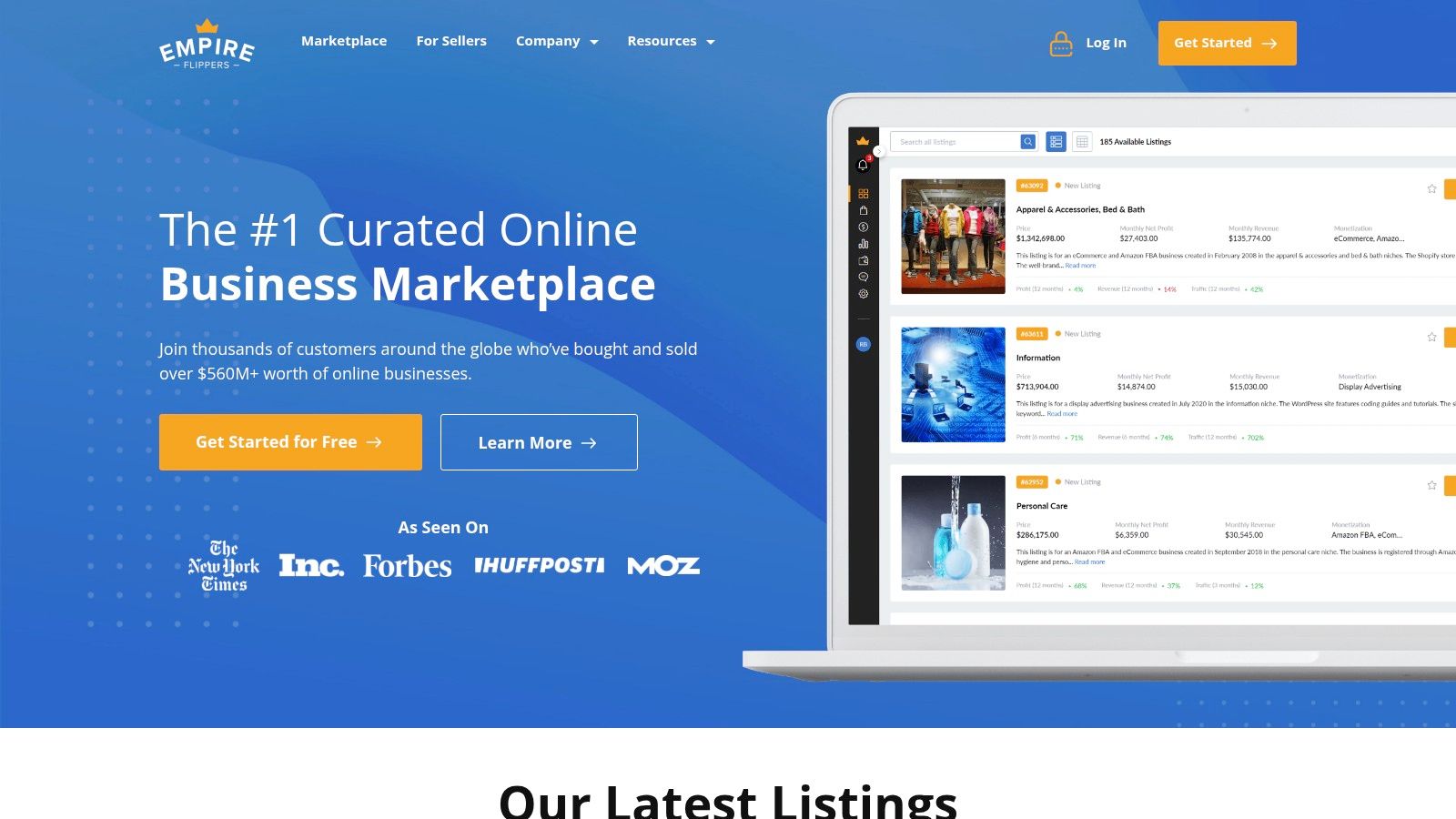
The platform specializes in curated, high-quality listings. Unlike open marketplaces, every business listed on Empire Flippers undergoes a rigorous vetting process. Their team verifies traffic claims, revenue streams (including detailed Amazon Associates reports), and other key financial data, providing buyers with a high degree of confidence.
Strategic Analysis: How to Use Empire Flippers
Empire Flippers isn’t just a place to buy a site; it’s a powerful tool for market research. By browsing the public listings, you can gain deep insights into what makes an Amazon affiliate site successful right now. For a deeper look into what niches are currently trending, you can explore profitable affiliate marketing niches here.
Here’s a breakdown of what makes it unique:
- Vetted Listings: They do the heavy lifting by verifying P&L statements, traffic data (often with direct Google Analytics access), and Amazon affiliate earnings. This significantly reduces due diligence time and risk.
- Detailed Data: Each listing includes a wealth of information, such as monetization methods, traffic sources, monthly net profit, and a seller interview (Q&A). This data is a goldmine for understanding the operations of a successful affiliate site.
- Unlockable Transparency: To view sensitive details like the website URL, you must provide proof of funds. This “unlock” process filters out non-serious buyers, protecting sellers and ensuring a high-quality marketplace environment.
- Post-Sale Support: Their in-house migrations team handles the entire process of transferring the website assets, domain, and affiliate accounts from the seller to the buyer, minimizing technical headaches.
Key Takeaways & Replicable Strategies
Even if you aren’t ready to buy, you can treat Empire Flippers as a free library of case studies.
- Reverse-Engineer Successful Niches: Browse the “Affiliate” category to see which niches are generating consistent profit. Look for sites in evergreen markets (e.g., home goods, pets, hobbies) and analyze their monthly revenue and traffic multiples. This tells you what the market currently values.
- Model Their Content Strategy: Once you unlock a listing, study its structure. Analyze the types of content they publish: Are they focused on “best of” listicles, single-product reviews, or informational “how-to” guides? This provides a proven content template to replicate.
- Benchmark Financial Performance: Use their verified financial data to set realistic goals for your own projects. A listing might show a site earning $1,500/month from 50,000 monthly visitors. This gives you a tangible traffic-to-revenue benchmark to aim for in your chosen niche.
2. Flippa
As one of the oldest and largest open marketplaces, Flippa offers a massive inventory of digital assets, making it a prime destination for finding diverse examples of Amazon affiliate websites. Unlike highly curated brokers, Flippa operates more like an open forum where anyone can list a site, ranging from small starter projects to established seven-figure businesses. This provides an unparalleled breadth of deal flow across all price points.
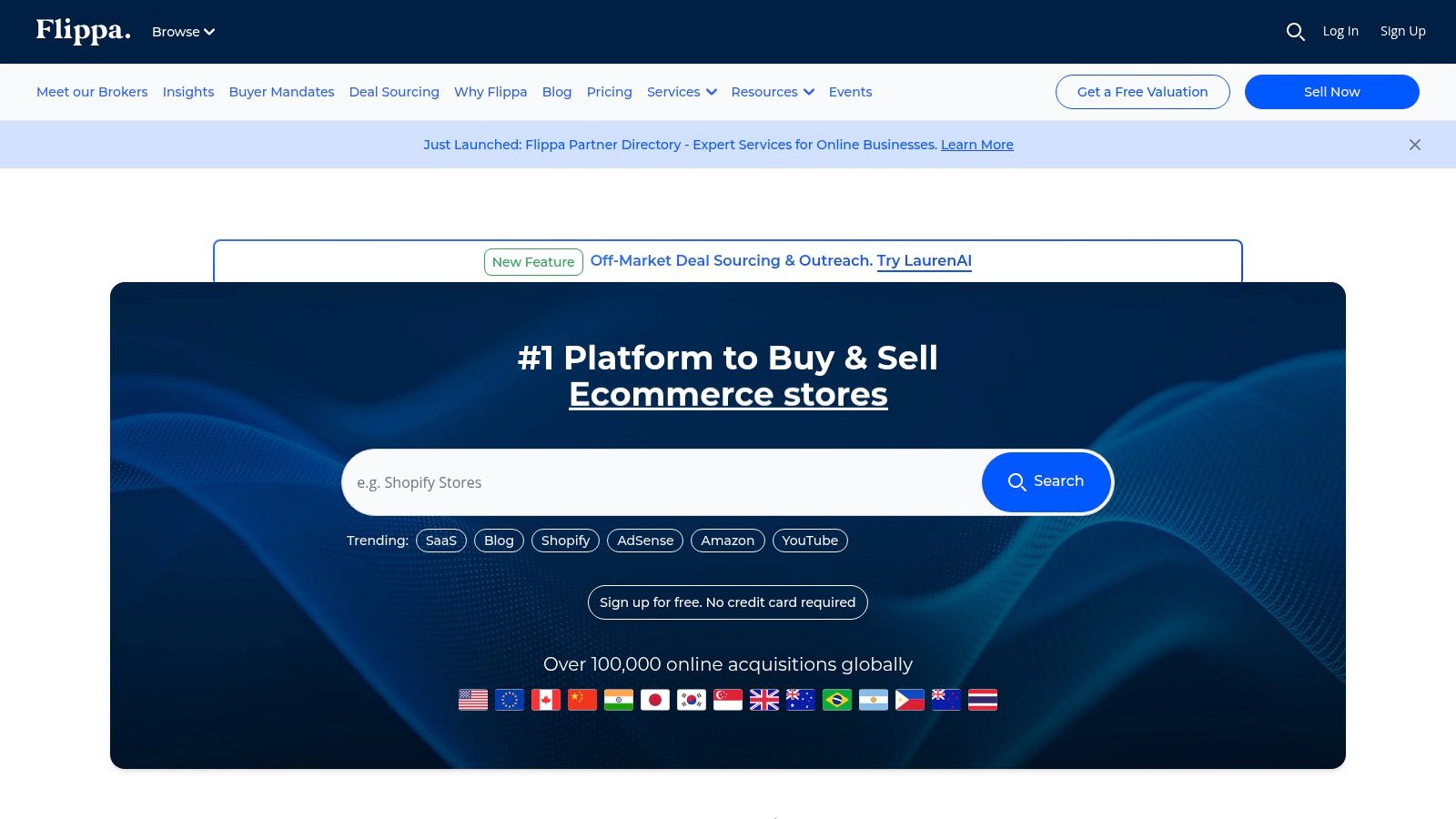
While the open nature of the marketplace means buyer diligence is crucial, Flippa equips users with powerful tools to vet opportunities. The platform features over 15 data integrations, allowing sellers to connect their Google Analytics, Amazon Associates, and other revenue accounts directly to their listing. This provides buyers with verifiable, third-party data to build confidence before making an offer.
Strategic Analysis: How to Use Flippa
Flippa is best approached as a vast research database for affiliate site models. Its sheer volume of listings allows you to spot trends, analyze a wide array of niches, and understand the market at different scales. The key is to leverage its verification features to filter out the noise and focus on high-quality assets.
Here’s a breakdown of what makes it a powerful research tool:
- Integrated Data Verification: Listings can display verification badges by connecting directly to sources like Google Analytics, Shopify, and Amazon Associates. This allows you to see real, unfiltered traffic and revenue data, which is invaluable for your own performance benchmarking.
- Diverse Listing Formats: Flippa supports both auction-style and fixed-price listings. Auctions can reveal the true market value of a specific type of affiliate site, providing real-time data on what buyers are willing to pay for certain traffic levels and revenue multiples.
- ‘Vetted by Flippa’ Badge: For higher-value assets (often over $50,000), Flippa offers a human-led vetting service. These listings undergo a more rigorous review of their financials and operations, offering a layer of security comparable to premium brokerages.
- Secure Deal Completion: Once a deal is agreed upon, all transactions, communication, and asset transfers are managed through Flippa’s secure Deal Completion Area, which includes KYC verification and integrated escrow services.
Key Takeaways & Replicable Strategies
Even without a budget to buy, Flippa serves as a free, real-time course in affiliate website valuation and strategy.
- Identify Undervalued Niches: Use the search filters to find Amazon affiliate sites with consistent traffic but low revenue. Analyzing these listings can reveal monetization gaps. You might find a site with strong rankings for informational keywords that could be monetized with “best of” product roundups, a strategy you can apply to your own site.
- Study Traffic Source Diversification: Many listings provide a detailed breakdown of their traffic sources (e.g., Organic Search, Pinterest, YouTube). Look for sites that aren’t solely reliant on Google. This can inspire you to build alternative traffic channels for your own projects, reducing risk and expanding your audience.
- Benchmark Against Real-World Multiples: Pay close attention to the final sale prices of auctions. A site earning $500/month that sells for $15,000 has a 30x monthly multiple. Tracking these multiples across different niches and business ages gives you a realistic understanding of what your own affiliate site could be worth.
3. Motion Invest
Similar to our previous entry, Motion Invest is another high-quality marketplace for buying and selling online businesses. However, it distinguishes itself with a laser focus on content-based websites, making it a prime destination to find examples of Amazon affiliate websites. Co-founded by experienced niche site builders, the platform is tailored for buyers and sellers who specifically operate in the SEO and affiliate marketing space.
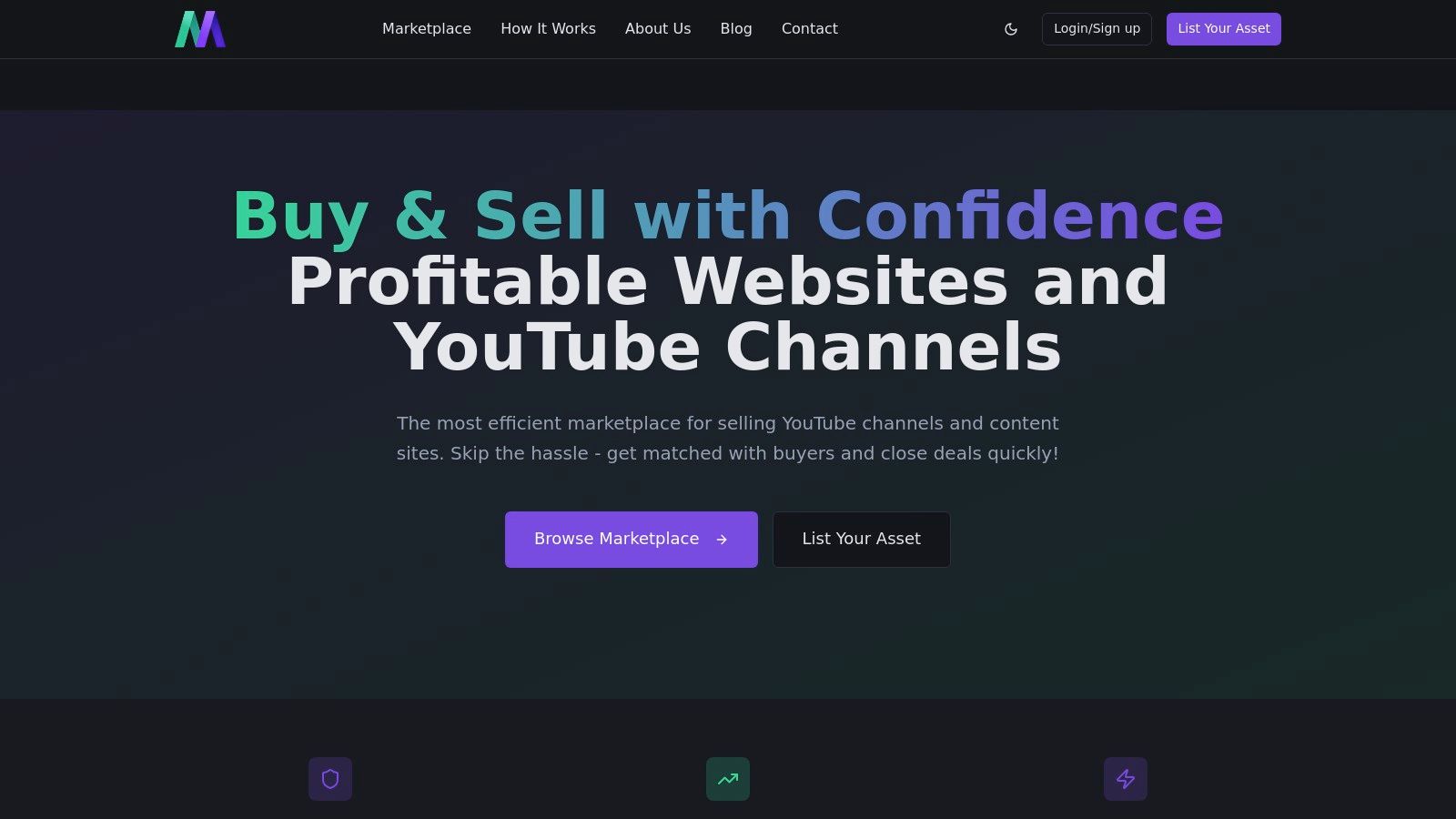
Motion Invest’s core appeal is its curated inventory. By filtering out e-commerce, SaaS, and other business models, it reduces the noise for affiliate marketers looking to acquire their next project or study successful sites. The listings often include smaller, more accessible sites, providing a great entry point for those with a more modest budget compared to larger M&A platforms.
Strategic Analysis: How to Use Motion Invest
Motion Invest serves as an excellent research tool for understanding the lower-to-mid-tier affiliate site market. Its transparent process and focus on content sites provide a clear window into what’s working on a smaller, more replicable scale. The platform is designed to be straightforward, making due diligence less intimidating for newcomers.
Here’s a breakdown of what makes it unique:
- Content-Site Focus: The marketplace exclusively lists content and affiliate sites. This specialization means every listing is relevant, saving you time from sifting through unrelated business models like dropshipping or SaaS.
- Accessible Price Points: While they list sites of all sizes, Motion Invest is known for having a healthy inventory of sites in the sub-$50,000 range, making it a practical option for first-time buyers.
- Simple Due Diligence: Listings are presented with clear, upfront data on traffic and earnings. The process often involves a non-refundable deposit (typically around $1,000 for sites over $2k) to “reserve” a site, granting you a period for deeper due diligence before finalizing the purchase.
- Hands-On Migration Support: The team offers assisted migrations, including help with swapping out affiliate links on top-performing pages. This is a significant benefit that helps ensure a smooth transition and minimizes potential income loss post-sale.
Key Takeaways & Replicable Strategies
By analyzing the active and sold listings on Motion Invest, you can extract actionable blueprints for building your own affiliate site from scratch.
- Identify Entry-Level Niches: Look at the smaller sites listed for sale. These often operate in hyper-specific, low-competition niches that are perfect for new builders. You can uncover profitable sub-niches you may not have considered, like “backyard birding” or “specialty coffee grinders.”
- Analyze Revenue Diversification: Many listings detail their monetization split. Pay attention to sites that combine Amazon Associates with other affiliate programs (like ShareASale or CJ) or display ads (like Ezoic or Mediavine). This provides a roadmap for diversifying your income streams as you grow.
- Study Traffic and Content Velocity: Each listing shows the site’s age and the number of articles published. You can calculate the average “content velocity” (e.g., 150 articles over 24 months = ~6 articles/month) and see how it correlates with traffic and revenue, giving you a realistic content production target.
4. Investors Club
Similar to our first entry, Investors Club is a private, curated marketplace for buying and selling online businesses. It’s an excellent platform for finding real-world examples of Amazon affiliate websites, with a strong focus on vetted, high-quality assets and a privacy-first approach that protects sellers from copycats.
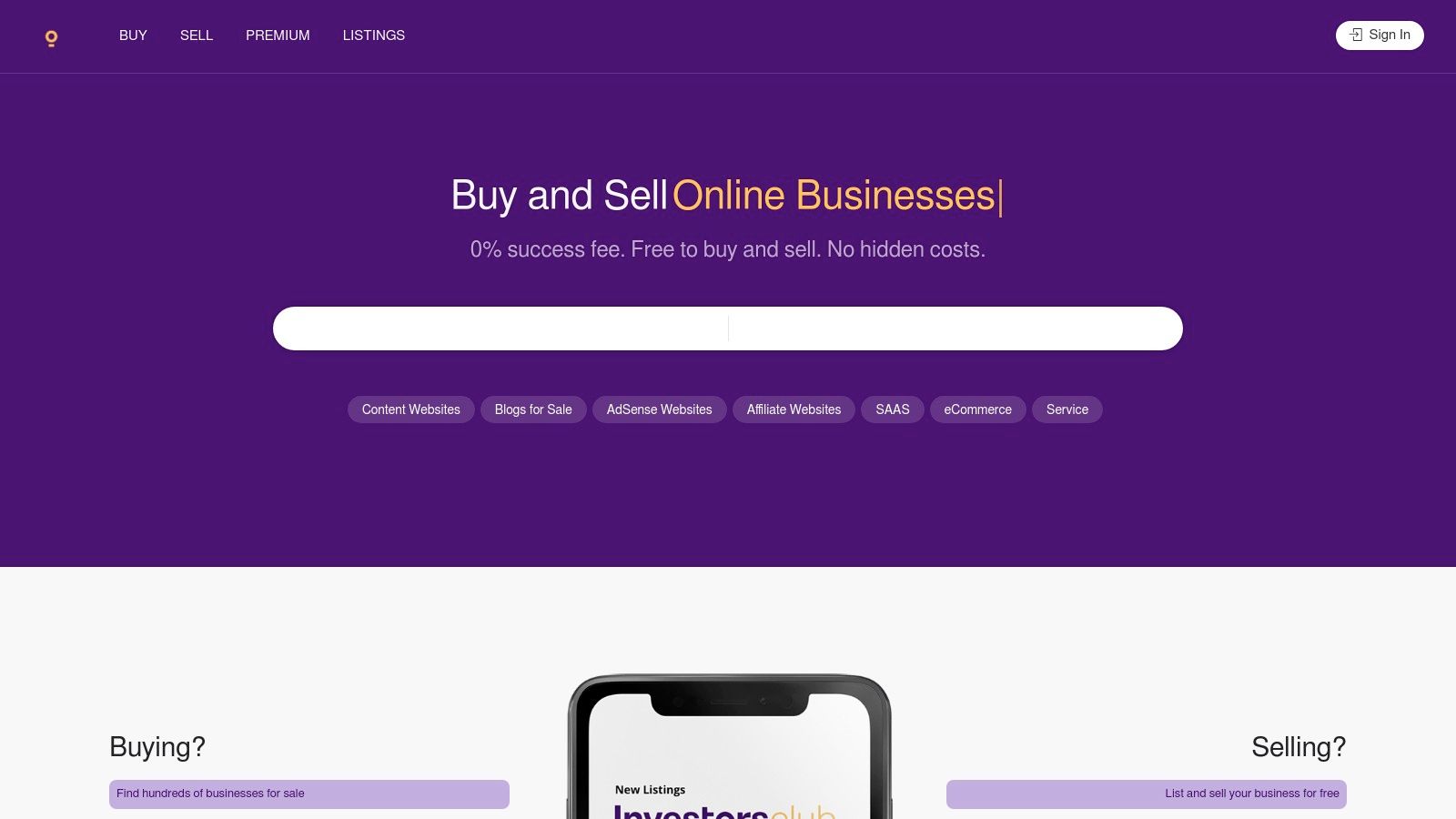
What sets Investors Club apart is its exclusive, membership-based model. While a free membership allows you to browse basic details, its Premium tier unlocks deeper data, early access to new listings, and direct communication with sellers. This structure ensures that only serious, vetted buyers are engaging with the assets, creating a more efficient and secure environment for everyone involved.
Strategic Analysis: How to Use Investors Club
Investors Club is more than just a place to buy a website; it’s a source of high-quality, verified data on what’s working in the Amazon affiliate space. The platform offers dedicated filtering for “Amazon Associates” and “Affiliate” monetization, making it easy to zero in on relevant case studies. The best part is that all listings are backed by a detailed due diligence report.
Here’s a breakdown of what makes it unique:
- Vetted Listings: Every site undergoes a comprehensive vetting process where the team verifies traffic, earnings, backlink profiles, and operational history. This due diligence is compiled into a detailed report available to members.
- Privacy-First Model: Unlike open marketplaces, URLs and other sensitive data are kept private. This protects the seller’s asset from being copied or targeted by negative SEO while it’s on the market.
- Membership Tiers: The free plan is great for initial research, but a Premium membership provides early access to deals and unlocks crucial data points. This tiered system filters for serious buyers and provides value at different commitment levels.
- Direct Communication: The platform facilitates direct chats with sellers, allowing prospective buyers to ask specific questions about strategy, operations, and growth opportunities.
Key Takeaways & Replicable Strategies
Even with a free account, you can extract valuable strategic insights from Investors Club to apply to your own projects.
- Analyze Niche Profitability: Use the “Amazon Associates” filter to see which niches are selling and at what multiple. Look at the ratio of revenue to traffic to understand the earning potential of different markets. A site in the pet niche might have a different RPM (revenue per mille) than one in the tech gadget space.
- Study Monetization Breakdowns: Listings provide a clear breakdown of revenue sources. You can see how top sites balance Amazon Associates income with other streams like display ads (e.g., Mediavine, AdThrive) or other affiliate programs. This helps you plan a diversified monetization strategy from the start.
- Benchmark Against Vetted Assets: Use the detailed reports to set realistic performance benchmarks. If a vetted site is making $2,000/month with 100 articles and a specific Domain Rating (DR), you have a tangible roadmap for what it takes to reach a similar level in a comparable niche.
5. Niche Site Project – 18 Amazon Affiliate Websites (Doug Cunnington)
For those seeking raw inspiration and real-world case studies, Doug Cunnington’s Niche Site Project offers a meticulously curated list of examples of Amazon affiliate websites. This resource isn’t a marketplace but rather an educational goldmine, compiling over a dozen live affiliate sites across various niches. It’s an essential bookmark for anyone in the research phase, providing a direct look at the competition and what’s currently working in the SERPs.
The platform functions as a public swipe file for affiliate marketers. Each website example is presented with key SEO metrics like Ahrefs Domain Rating (DR) and estimated monthly organic traffic. Doug also provides brief but insightful commentary on their monetization strategies, noting the mix between Amazon Associates and display advertising, which is a common and profitable combination.
Strategic Analysis: How to Use Niche Site Project
The primary value of this free resource is its function as a live laboratory for niche and content analysis. Instead of guessing what a successful affiliate site looks like, you can click through and see one firsthand. This direct access allows you to deconstruct their on-page SEO, content structure, and user experience. If you’re looking for a structured approach on how to leverage these examples, you can find a comprehensive guide on how to make money with Amazon affiliate marketing.
Here’s a breakdown of what makes it unique:
- Live Examples: Unlike theoretical case studies, this list links directly to active, income-generating websites that you can browse and analyze in real-time.
- Key SEO Snapshots: Each entry includes crucial metrics like organic traffic estimates and Domain Rating, giving you a quick overview of the site’s authority and reach.
- Monetization Mix Insights: The commentary often highlights how sites blend Amazon affiliate links with display ads from networks like Ezoic or Mediavine, showcasing a diversified revenue model.
- Niche Discovery Tool: The list spans a wide range of niches, from home and kitchen to outdoor gear and technology, making it an excellent starting point for brainstorming and validating your own ideas.
Key Takeaways & Replicable Strategies
Treat this curated list as a free, ongoing competitive analysis tool to guide your own site-building efforts.
- Validate Niche Viability: Before committing to a niche, browse this list to see if similar sites exist and are successful. A site with 50,000 monthly visitors in the “home coffee” niche is a strong signal that the market can support another player.
- Deconstruct Content Silos: Click into a few examples and analyze their site structure. Pay attention to how they use categories and internal linking to build topical authority. Map out their main content “silos” (e.g., product reviews, buying guides, informational posts) and use it as a template for your own site architecture.
- Analyze On-Page SEO Tactics: Study how these sites format their content. Look at their use of H2/H3 headings in “best of” listicles, the design of their product comparison tables, and how they integrate calls-to-action (CTAs) like “Check Price on Amazon” buttons. These are proven tactics you can immediately apply to your own articles.
6. Ahrefs Blog – Successful Amazon Affiliate Websites
Instead of a single site, our next entry is a powerful educational resource that dissects multiple examples of Amazon affiliate websites. The Ahrefs Blog, published by the renowned SEO tool suite, offers an in-depth article showcasing successful affiliate sites, complete with strategic breakdowns and traffic estimates. It serves as a masterclass in reverse-engineering success using data-driven SEO principles.
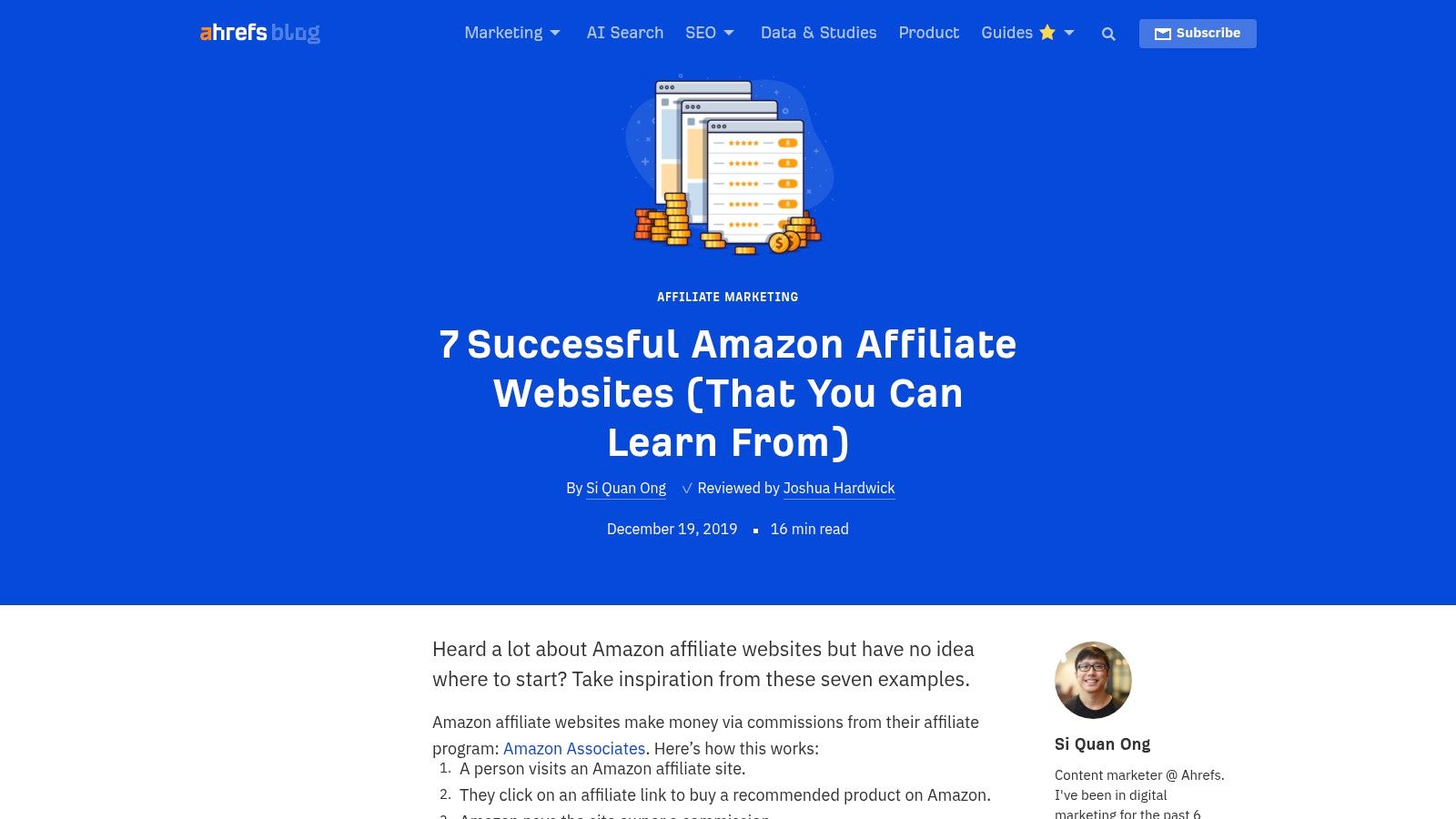
This resource stands out because it’s not just a list; it’s a collection of mini case studies. Each example is analyzed through the lens of Ahrefs’ powerful data, revealing the SEO tactics and content strategies that drive their traffic and revenue. It’s an ideal starting point for anyone who wants to understand the “why” behind a successful affiliate site, not just the “what.”
Strategic Analysis: How to Use the Ahrefs Blog
The Ahrefs Blog is a treasure trove for affiliate marketers who want to build a site with a strong SEO foundation from day one. You can use their analysis to identify proven content frameworks and link-building strategies that are currently working in competitive niches. For those looking to master the core of affiliate content, you can find a guide on how to write compelling product reviews that convert here.
Here’s a breakdown of what makes it unique:
- Data-Backed Analysis: Each site example is accompanied by Ahrefs metrics like Domain Rating (DR), estimated organic traffic, and top-ranking keywords. This provides a quantifiable measure of success and authority.
- Actionable “Why It Works” Insights: The blog goes beyond surface-level observations. It explains the specific SEO and content strategies each site uses, such as building topic clusters, targeting long-tail keywords, or creating unique, valuable content that attracts backlinks.
- Diverse Niche Coverage: The examples span various markets, from coffee and outdoor gear to PC parts and home goods. This diversity demonstrates that the core principles of affiliate SEO can be applied successfully across different industries.
- Complementary Tutorials: The article is part of a larger ecosystem of content on the Ahrefs blog. It naturally links to step-by-step guides on keyword research, link building, and content creation, creating a comprehensive learning path.
Key Takeaways & Replicable Strategies
Even without an Ahrefs subscription, you can leverage their free blog content to build a powerful affiliate strategy.
- Emulate Proven Content Structures: Analyze the types of articles they highlight. You’ll often see a mix of “best of” roundups, single-product reviews, and informational guides. This confirms the importance of a balanced content strategy that targets buyers at different stages of their journey.
- Focus on Topical Authority: A recurring theme in their analysis is the concept of topical authority. Successful sites don’t just write random reviews; they build deep content hubs around a specific subject (e.g., everything about espresso machines). This signals expertise to Google and helps the entire site rank better.
- Benchmark Competitor Metrics: Use the DR and traffic estimates as a directional guide for your own niche. If a leading site in your target market has a DR of 45 and gets 100k monthly visitors, you have a clear, long-term goal to aim for. This helps you set realistic expectations for growth.
7. The Website Flip
Shifting from a direct marketplace to an invaluable educational resource, The Website Flip offers an operator-led perspective on acquiring Amazon affiliate sites. Run by seasoned investor Mushfiq Sarker, it serves as a masterclass in due diligence, providing playbooks, checklists, and market analysis. It’s the perfect destination for buyers who want to learn how to vet and value an asset before making a purchase.
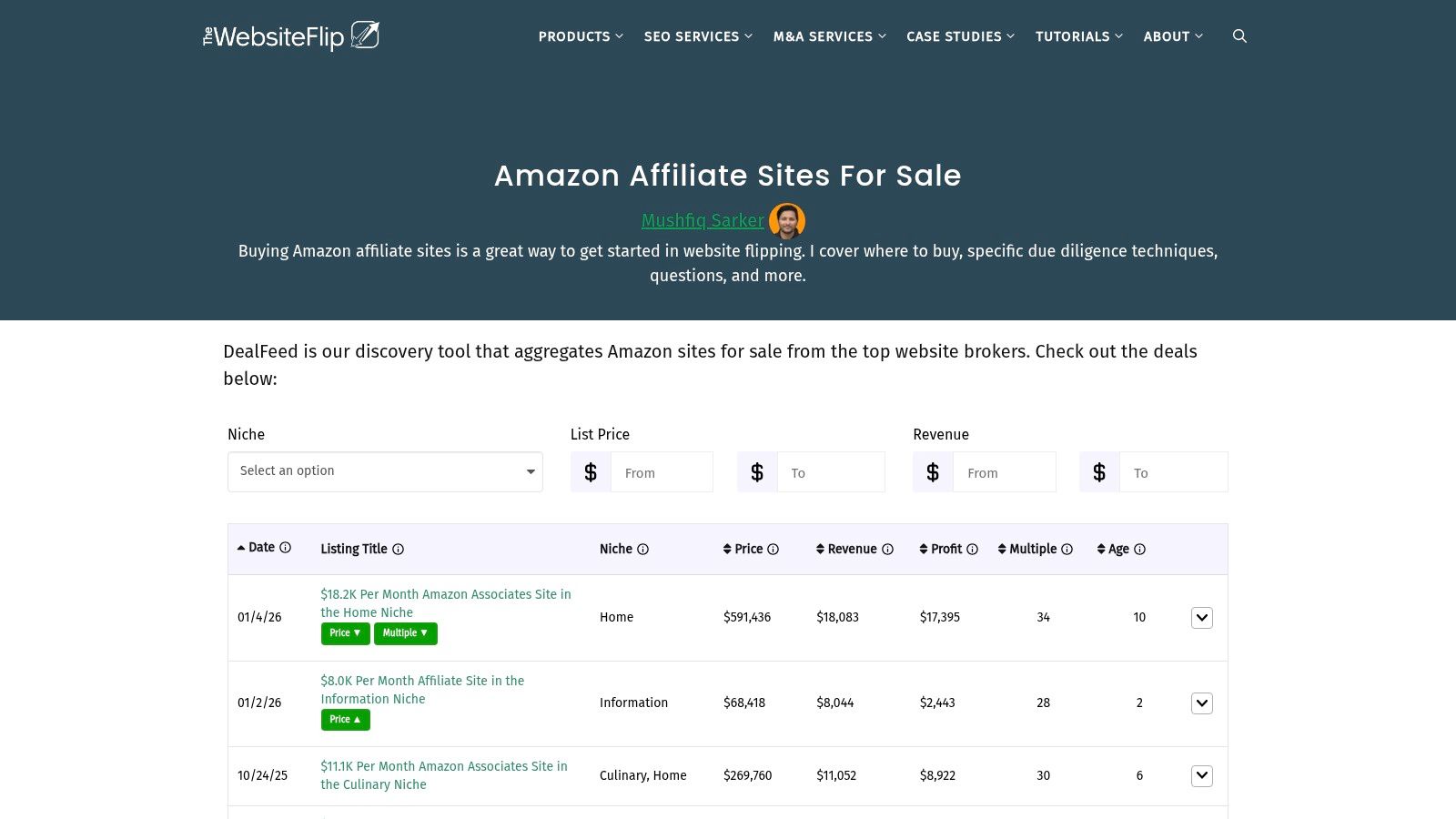
Unlike a traditional broker, The Website Flip focuses on teaching you the skills to find and analyze deals across various platforms, from private sales to major marketplaces like Flippa. It provides the strategic framework needed to confidently evaluate potential acquisitions, making it a critical resource for building a portfolio of examples of Amazon affiliate websites.
Strategic Analysis: How to Use The Website Flip
The Website Flip acts as your personal due diligence advisor. Instead of just presenting listings, it equips you with the knowledge to scrutinize them effectively. The site is a treasure trove of real-world case studies, deal comps, and actionable operator tips that you can apply immediately to your own investment research.
Here’s a breakdown of its unique value:
- Operator-Led Guidance: The content comes from an experienced buyer and seller, offering practical insights into vetting traffic quality, verifying revenue claims, and analyzing backlink profiles.
- Comprehensive Checklists: It provides detailed due diligence checklists specifically for Amazon Associate websites, covering everything from SEO red flags to content quality assessments.
- Marketplace Roundups: The platform regularly analyzes deals from various sources, giving you a sense of current market valuations and highlighting what to look for in a good investment.
- Private Deal Flow: Subscribers to the newsletter occasionally get access to off-market or private deals, providing opportunities to acquire assets before they hit public marketplaces.
Key Takeaways & Replicable Strategies
Even if you’re just starting your journey, The Website Flip is an essential educational tool for understanding the affiliate business model from an investor’s point of view.
- Master Due Diligence: Use their extensive guides and checklists to create your own vetting process. Before you even consider buying a site, learn how to spot manipulated traffic stats, weak link profiles, and over-reliance on a few “money” pages.
- Learn Valuation Frameworks: Study their deal breakdowns and market reports to understand how affiliate sites are valued. This knowledge is crucial for making competitive offers and avoiding overpaying for an underperforming asset.
- Find Hidden Opportunities: Follow their advice on where to look for deals beyond the major marketplaces. Learning how to source private deals or find undervalued assets on platforms like Flippa can give you a significant competitive advantage.
Top 7 Amazon Affiliate Website Comparison
| Option | Complexity 🔄 | Resources 💡 | Expected outcomes 📊⭐ | Ideal use cases ⚡ | Key advantages ⭐ |
|---|---|---|---|---|---|
| Empire Flippers | Moderate–High; formal vetting & migration steps | Higher — proof-of-funds, buyer fees, time for due diligence | Reliable, verified cashflow; lower transfer risk | Buyers seeking established, lower-risk affiliate sites with handover | Strict verification; detailed P&L; in-house migrations |
| Flippa | Variable — simple auctions to complex brokered deals | Low–Medium — many low-cost listings; optional add-on services | Wide variance — bargain finds and higher-risk listings | Buyers wanting maximum deal flow across price ranges | Huge inventory; multiple listing formats; verification integrations |
| Motion Invest | Low–Moderate; streamlined, content-focused process | Medium — non-refundable deposits on many listings; assisted migration | Targeted for content/affiliate outcomes; smoother handovers | Buyers focused on SEO/content affiliate sites | Niche focus; lower noise; clear handover support |
| Investors Club | Moderate — privacy-first, category filters, membership gating | Low to Medium — free browse; Premium for deeper data/early access | Curated, mid-market outcomes; protected asset details | Smaller budgets or buyers valuing privacy and curation | Private listings; Amazon/affiliate categories; direct seller chats |
| Niche Site Project (Doug) | Low — educational resource, no marketplace functions | Low — time to consume content; optional keyword downloads | Research-driven insights; example site structures and niches | Market research, inspiration, pre-build validation | Real site examples; practical commentary for beginners |
| Ahrefs Blog | Low — editorial analysis and tutorials | Low — time to read; data-backed examples | High-quality SEO guidance; actionable tactics to replicate | SEO-driven strategy, reverse-engineering successful sites | Data-backed analysis; clear “why it works” insights |
| The Website Flip | Low — operator-led guides and checklists | Low — reading/newsletter; occasional private deal alerts | Improved diligence and valuation decisions; tactical guidance | Buyers wanting playbooks, due-diligence frameworks, deal comps | Practical operator tips; due-diligence checklists; deal comps |
Your Next Step: From Inspiration to Implementation
We’ve explored a diverse range of examples of Amazon affiliate websites, from publicly sold assets on Empire Flippers and Flippa to in-depth case studies from Ahrefs and The Website Flip. Studying these successful projects is an invaluable first step, but the real growth happens when you transition from passive analysis to active creation. The journey from inspiration to implementation is where your own profitable asset begins to take shape.
Across all the examples, a few core principles consistently emerged as the foundation for success. These are not secrets, but rather proven pillars of a sustainable affiliate business.
Core Takeaways from Successful Affiliate Sites
The most profitable and resilient affiliate sites we examined all share a common DNA. They don’t rely on short-term tricks; they build long-term value by mastering the fundamentals.
- Niche Down, Then Dominate: Success rarely comes from targeting broad, competitive markets. The standout sites, like those analyzed by Doug Cunnington, often start by owning a very specific sub-niche. They become the go-to authority for a narrow audience before expanding.
- User Intent is Everything: Every piece of content should be meticulously crafted to answer a specific user question or solve a problem. It’s not just about “best X for Y” articles; it’s about understanding the entire buyer’s journey, from informational queries to transactional searches.
- Content Quality is Non-Negotiable: The days of thin, keyword-stuffed articles are long gone. Genuinely helpful, well-researched, and experience-driven content (E-E-A-T) is what earns trust from both users and search engines.
- Diversification is Your Safety Net: Relying solely on one traffic source (like Google) or one monetization method (like Amazon Associates) is a risky strategy. The smartest operators diversify into other affiliate programs, display ads, and traffic channels like YouTube or Pinterest over time.
Charting Your Path Forward: Build or Buy?
Now, you have a critical decision to make: do you build your site from the ground up or buy a starter site to accelerate your progress?
- Building from Scratch: This path offers the most control and the lowest initial cash investment, but it requires significant time and sweat equity. You will be responsible for everything, from niche selection and keyword research to content creation and link building. This is where insights from resources like Ahrefs and Niche Site Project become your playbook.
- Buying an Asset: Marketplaces like Flippa, Motion Invest, and Investors Club allow you to bypass the initial “sandbox” phase. You can acquire a site with existing traffic and revenue, but this requires capital and the ability to perform thorough due diligence. The risk is financial, but the potential for faster ROI is high.
Regardless of your chosen path, the strategic principles remain the same. A purchased site still needs high-quality content, ongoing SEO, and smart monetization to grow.
Implementing the Right Tools and Strategies
As you transition from gaining inspiration to actively building and optimizing your own Amazon affiliate site, leveraging the right technology is key. Manually managing keyword research, content optimization, and competitor analysis is incredibly time-consuming. You might find it beneficial to explore resources like the article on the 12 Best AI SEO Tools to Dominate Search in 2025 from LLMrefs. These tools can automate repetitive tasks and provide data-driven insights, helping you implement the strategies we’ve discussed with greater efficiency and precision.
Building a successful affiliate site is a marathon, not a sprint. The examples in this article prove what’s possible with a clear strategy, consistent effort, and a focus on providing real value to your audience. Take these lessons, choose your path, and commit to the process. Your future profitable asset is waiting to be built.
Tired of trial and error? If you want to shorten your learning curve and apply these proven strategies with expert guidance, the mentorship at Daniel Proctor is your next step. Get the 1-on-1 support and step-by-step playbooks you need to build a profitable affiliate business without the common pitfalls. Learn more at Daniel Proctor.
