


So, is the Uber affiliate program actually worth your time?
For the right person, absolutely. If your audience is packed with travelers, foodies, or anyone new to a city, this program is a solid choice. You’re connecting them with a massive, globally trusted brand.
But it’s not for everyone. The program’s entire focus is on first-time users only. Plus, the 30-day cookie duration isn’t the most generous out there. If you’re hunting for recurring commissions, you’ll need to look elsewhere.
A Snapshot of the Uber Affiliate Opportunity
It’s easy to look at a huge brand like Uber and assume its affiliate program is a guaranteed home run. And while the potential is definitely there, your success really boils down to one thing: does the program’s structure fit your content and your audience?
This isn’t about tossing up a banner and hoping for the best. It’s about consistently reaching people who have never used Uber or Uber Eats before.
Think of yourself as a digital tour guide. You’re the one introducing someone to a new way to get around town or have their favorite tacos delivered. Your real value is in that first introduction. Once they’ve taken a ride or ordered a meal, your job for that specific customer is done. This “one-and-done” model is a crucial part of our uber affiliate program review because it directly shapes how you’ll earn money over the long haul.
Uber Affiliate Program At a Glance
To help you figure out if this program is a good fit, let’s cut through the noise and look at the core details. This table gives you a quick snapshot of what you’re working with.
| Feature | Details |
|---|---|
| Commission Type | Pay-per-action (new rider or new Eats customer) |
| Target Audience | First-time users of Uber or Uber Eats only |
| Cookie Duration | 30 days (last-click attribution) |
| Primary Verticals | Rideshare, Food Delivery, Transportation |
| Global Reach | Available in multiple countries worldwide |
This kind of model is a big piece of the affiliate marketing puzzle, which is expected to swell into an $18.5 billion industry by 2025. Mobility services like Uber are a huge driver of that growth. You can always dig deeper into Uber’s global operations over on their official site.
In the end, it all comes back to your audience. If you’re constantly talking to new travelers, people moving to a new city, or food lovers looking for delivery options, the Uber affiliate program is a straightforward way to monetize that traffic. For a better sense of how these earnings stack up, take a look at our guide on how much affiliates make to compare this model against others. This program is built for affiliates who can tap into a steady stream of brand-new users.
How Uber Affiliate Commissions Actually Work
Let’s get down to the most important part: the money. Understanding how you get paid is crucial, and Uber keeps it pretty simple, but with one major rule you absolutely have to know.
You only get paid for bringing brand-new users to the platform.
Think of it like being a promoter for a hot new restaurant. You get a kickback for every new person you convince to come in and try a meal for the very first time. If they love it and come back every week, that’s awesome for the restaurant, but your job was just to get them through the door that first time. Uber’s program works on the exact same logic.
Your commission is triggered by one of two specific actions:
- A new rider takes their first trip: Someone who has never used Uber before signs up with your link and actually completes a ride.
- A new customer places their first order: Someone new to Uber Eats uses your link to sign up and gets their first meal delivered.
This “first-timer” model means you have to constantly reach people who haven’t yet jumped on the Uber bandwagon. Your success isn’t about promoting to existing users, but about finding the newbies.
Unpacking the Commission Rates and Payouts
Okay, so how much are we talking? Well, it depends. Commission rates aren’t the same everywhere; they change based on your location and which affiliate network you’re using. Uber works with big players, and you can shop around on platforms like the Impact affiliate network to see who offers the best deal for your audience’s region.
The big takeaway here is that the rates are not one-size-fits-all. A new rider you refer in New York could earn you a different commission than one in London. This is a huge factor in your potential earnings, so pay close attention to it.
Getting the money into your bank account is just as important. Here’s a quick rundown of the payment process:
- Payout Threshold: You won’t get paid until you hit a minimum balance, usually something like $50 or $100. This is standard stuff and just helps them cut down on processing a bunch of tiny payments.
- Payment Methods: Most networks give you flexible options like direct deposit (ACH), PayPal, or a wire transfer. You can pick whatever works best for you.
- Payment Schedule: Payouts are usually monthly, but there’s often a “locking” or verification period. This means commissions you earn in January might get confirmed in February and finally paid out in March.
It’s a cycle you need to get used to for managing your cash flow.
The whole system is riding a massive wave of growth in performance-based marketing. The affiliate marketing world is projected to grow by about 10% annually by 2025, and the industry is expected to be worth $12 billion by 2026. With Uber completing over 11.27 billion trips in 2024, they are a huge part of that trend.
This graphic breaks down the entire flow, from your content all the way to your wallet.
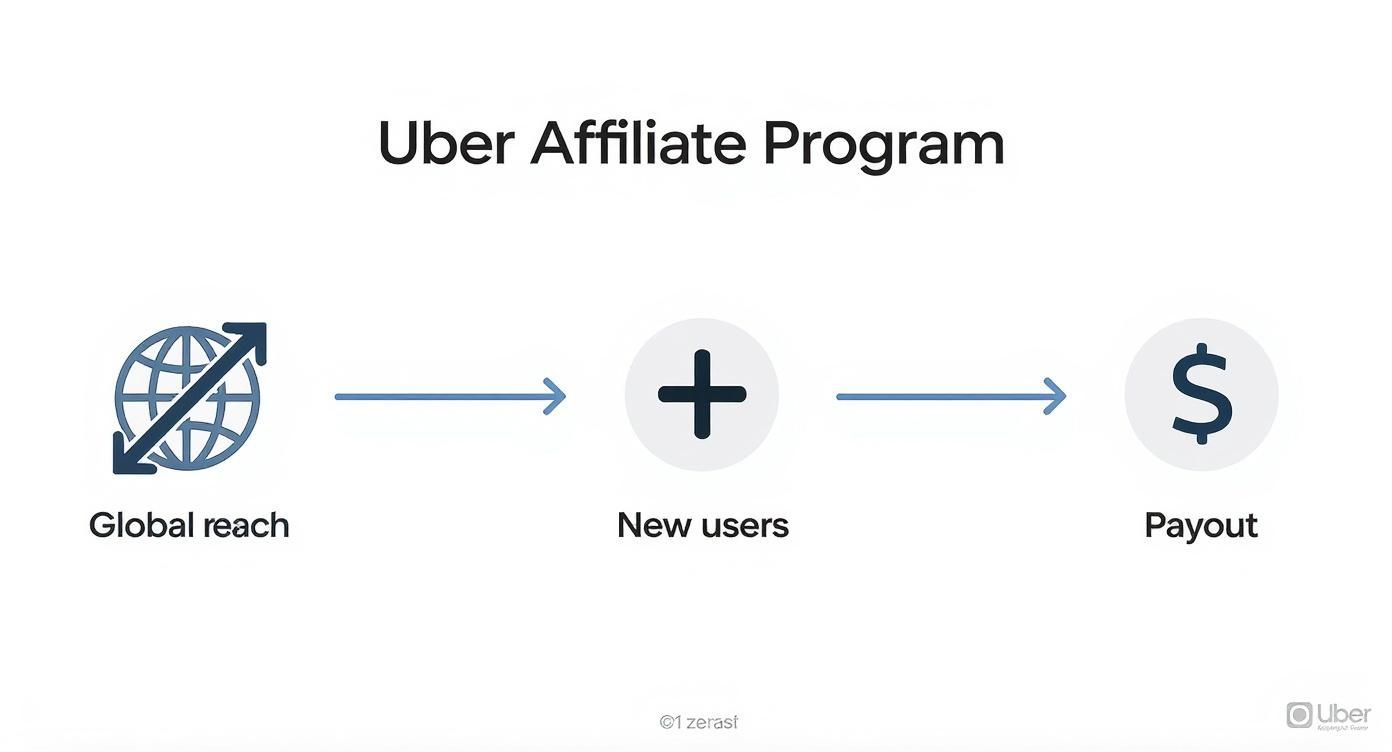
As you can see, it’s a simple three-stage process: you tap into Uber’s massive global presence, convert new users with your unique links, and get paid for it.
Factors That Influence Your Earnings
Your actual income isn’t just a simple math problem. Several things can seriously swing your earnings up or down.
- Audience Demographics: Who are you talking to? College kids heading out for the night? Business travelers landing in a new city? Each group has a totally different chance of being a “new user.”
- Content Quality and Niche: A travel blogger writing a “First-Timer’s Guide to Paris” is in a perfect spot to promote that first airport ride. A generic “save money” blog? Not so much. Your content needs to solve a specific problem.
- Geographic Focus: Promoting Uber in a city where it just launched can be a goldmine. Trying to do the same in San Francisco, where your grandma probably has the app? Much, much tougher.
- Promotional Timing: Pushing your Uber links during big holidays, music festivals, or peak travel seasons is a no-brainer. You’ll catch a wave of new users who need a ride.
At the end of the day, success comes down to how well you can target people who genuinely need Uber but just haven’t signed up yet. Once you nail down the commission structure and the factors that drive your income, you can build a solid, realistic strategy.
Getting Approved for the Uber Affiliate Program
Let’s be clear: joining the Uber affiliate program isn’t like signing up for a newsletter. It feels more like applying to an exclusive club, and to get in, you need to show them you’re a valuable partner who can actually bring in new sign-ups.
Think of it as a job interview. Uber wants to partner with people who already have a platform and an audience that trusts them. Your application is your resume, and it needs to make a killer first impression.

What the Uber Review Team Looks For
The review team isn’t just looking for anyone with a website; they have a checklist. They’re trying to find affiliates who match their brand and can deliver real results. Knowing what’s on that list is your first step to putting together an application that stands out.
Your platform is everything. Whether it’s a blog, a YouTube channel, or a buzzing social media profile, it has to look professional and be actively maintained. A messy, outdated site is a guaranteed “no.”
Here’s what they really care about:
- Established Online Presence: You need a live, working platform with a solid history of content. A brand-new site with just a handful of posts probably won’t cut it.
- Relevant and Engaged Audience: Your followers need to be the kind of people who would actually use Uber or Uber Eats. A travel blog? Perfect fit. A blog about knitting? Not so much.
- High-Quality Content: Your content must be original, well-written, and look professional. It should prove you’re a credible voice for your audience.
- Sufficient Traffic: They don’t list specific numbers, but you need to prove you have an active audience. Be ready to share your monthly visitor stats or follower counts.
It all boils down to one thing: Uber wants partners who can reach potential new customers at scale. Your application needs to prove you have that audience and a platform that makes the Uber brand look good.
Common Reasons for Rejection and How to Avoid Them
A lot of applications get tossed aside for reasons that are easy to fix. Understanding these common mistakes can seriously boost your chances of getting approved on the first try. The biggest one is a mismatch between your audience and Uber’s ideal customer.
Another huge reason for rejection is a lack of transparency. If the review team can’t figure out where your traffic comes from or how you plan to promote them, they’re going to pass.
To make your application shine, here are a few things you should do:
- Clean Up Your Website: Before you even start the application, do a full audit of your site. Fix broken links, update old articles, and make sure your design is clean and easy to navigate.
- Highlight Your Best Metrics: Don’t be vague. In your application, get specific about your audience. Mention your monthly page views, social media engagement rates, and any other data that shows you have a real community.
- Be Clear About Your Strategy: Briefly explain how you plan to promote Uber. Something like, “I’ll be adding Uber promotions to my popular ‘First-Timer’s Guide to New York City’ to reach new travelers.”
When you present a professional platform with a clear, relevant strategy, you stop being just another applicant and start looking like a potential partner. That proactive approach is the secret to a successful uber affiliate program review and getting that approval email.
Understanding the Rules of the Road
Doing well with the Uber affiliate program isn’t just about getting people to click your links; it’s about playing by their specific rules. Think of these guidelines like the traffic laws of affiliate marketing—know them, and your commissions keep flowing. Ignore them, and you risk getting your account shut down.
Two things are absolutely critical to get right: how Uber tracks your referrals and the brand guidelines you have to follow. Honestly, getting these technical and legal details sorted is the foundation of a good partnership.
Decoding Uber’s Tracking and Attribution
The tracking system is the heart of any affiliate program. It’s the tech that makes sure you get paid when someone signs up through your link. With Uber, there are two pieces to this puzzle: the cookie duration and the attribution model.
A tracking cookie is just a small file that gets saved on a user’s device when they click your affiliate link. This little file tells Uber that you sent them. The good news is the Uber affiliate program offers a 30-day cookie duration. This means if someone clicks your link, you’ll earn a commission as long as they sign up and take their first ride or place an Eats order within that 30-day window.
But the cookie window is only half the story. Uber uses a last-click attribution model, which is pretty standard in the industry.
Imagine a potential rider clicks a link from Blogger A today. A week later, they click another link from Blogger B before finally signing up. In this case, Blogger B gets 100% of the commission because their link was the last one the user clicked before making a move.
This setup rewards affiliates who are the final nudge in a customer’s decision. Your whole strategy should be about being that last, decisive click that gets someone to sign up.
Staying Within Brand Guidelines
Uber is a massive global brand, and they protect their image carefully. As an affiliate, you’re expected to represent them the right way. Breaking these brand rules is probably the quickest way to get kicked out of the program.
The rules are mostly about how you use the Uber name, logo, and the language in your promotions. Here are the big ones you absolutely cannot ignore:
- No Brand Bidding: You are strictly forbidden from bidding on Uber’s branded keywords in any paid ads. This means no bidding on terms like “Uber,” “Uber promo code,” or “Uber Eats.” If you try, you’ll be removed from the program immediately.
- Logo and Creative Usage: You have to use the official logos and creative assets provided on the affiliate platform. Don’t alter them, create your own banners, or misrepresent the Uber brand in any way.
- Clear and Honest Promotion: Your content has to be truthful. You can’t promise discounts that don’t exist or use misleading, clickbait-style titles. For instance, never advertise a “free ride” unless that’s the official, current offer Uber is providing.
These rules aren’t just to protect Uber’s brand; they’re also there to fight fraud. The whole industry has a massive problem with this stuff. Back in 2020, affiliate marketing fraud cost businesses a whopping $1.4 billion, and you can bet that hit Uber’s bottom line. Understanding these risks is part of any complete uber affiliate program review. You can dig deeper into these industry-wide issues by checking out some key affiliate marketing statistics.
At the end of the day, if you respect the cookie policy and stick to the brand rules, you’re building a solid, trustworthy partnership. This lets you promote Uber with confidence, knowing you’re playing by the book and protecting your long-term earnings.
An Honest Look at the Pros and Cons
Let’s be real: no affiliate program is perfect for everyone, and Uber’s is no exception. Before you jump in, you need a balanced look at what you’re getting into—weighing the massive advantages against some pretty significant drawbacks. A proper uber affiliate program review means looking past the household name and figuring out if the program’s structure actually works for you.
On the one hand, partnering with Uber gives you incredible brand leverage. You’re not trying to convince people to try some obscure new app; you’re promoting a service billions already know and trust. That built-in recognition does a lot of the heavy lifting for you.
But here’s the catch: the program is built entirely on a “one-and-done” commission model. You only get paid for new users, which is a critical detail that shapes your entire earning potential.
Key Advantages of Partnering with Uber
The biggest pro is the instant brand credibility. When you drop an Uber link, your audience immediately knows what it is. This global recognition makes it so much easier to get that first click and conversion because the trust is already there.
Another huge plus is the broad and diverse target audience. Think about it. Almost everyone is a potential Uber customer. Travelers, foodies grabbing a bite with Uber Eats, commuters, people heading out for the night… the list goes on. This gives you a ton of flexibility with your content.
The sheer scale of Uber’s operation is a massive asset. With a presence in thousands of cities worldwide, you can monetize an international audience. This makes it a fantastic fit for travel bloggers or creators with a global following.
Finally, Uber hooks you up with high-quality promotional materials. You get access to professionally designed banners, links, and other creative assets. This not only saves you time but ensures your promotions look clean, trustworthy, and on-brand.
Significant Drawbacks to Consider
The single biggest drawback, without a doubt, is the “new users only” commission structure. You earn absolutely nothing from repeat customers. This means no recurring revenue, putting you on a constant treadmill to find a fresh stream of first-time users just to keep the money coming in.
Because of this, it’s less of a passive income play and more of an active customer acquisition game. If your audience is in a city where Uber is already everywhere, finding those “new” users gets tough, fast.
On top of that, you’re facing intense competition. Since Uber is such a massive brand, you’re competing against everyone from major travel sites to small-time bloggers, all fighting for the same new customers. This can make it hard to stand out, especially if you’re relying on paid ads.
Uber Affiliate Program Pros vs Cons
To make things simple, here’s a straightforward comparison of the program’s main strengths and weaknesses.
| Pros (Advantages) | Cons (Disadvantages) |
|---|---|
| Globally Recognized Brand: Leverage instant trust and name recognition to boost conversions. | New Users Only: No recurring commissions, requiring a constant search for new customers. |
| Vast Target Audience: Promote to travelers, foodies, commuters, and more across many niches. | High Market Saturation: Intense competition from other affiliates in established markets. |
| International Reach: Monetize a global audience in thousands of cities where Uber operates. | Strict Promotional Rules: Tight restrictions, especially on paid ads and brand bidding. |
| Professional Creatives: Access to a library of ready-to-use, high-quality marketing assets. | Single-Action Payout: Earnings are tied to one specific action (first ride/order), limiting revenue streams. |
Ultimately, whether the Uber program works for you comes down to a clear-eyed look at these points. If you have a content strategy that consistently brings in new people—like a travel blog focusing on “first-timer” city guides—the pros might just win out. But if you’re aiming for a more passive, long-term income stream from a stable audience, those limitations could be a dealbreaker.
Smart Strategies to Promote Uber and Earn More
Look, anyone can just drop an affiliate link on their homepage and hope for the best. But if you want to actually earn decent money with the Uber affiliate program, you need to be smarter than that.
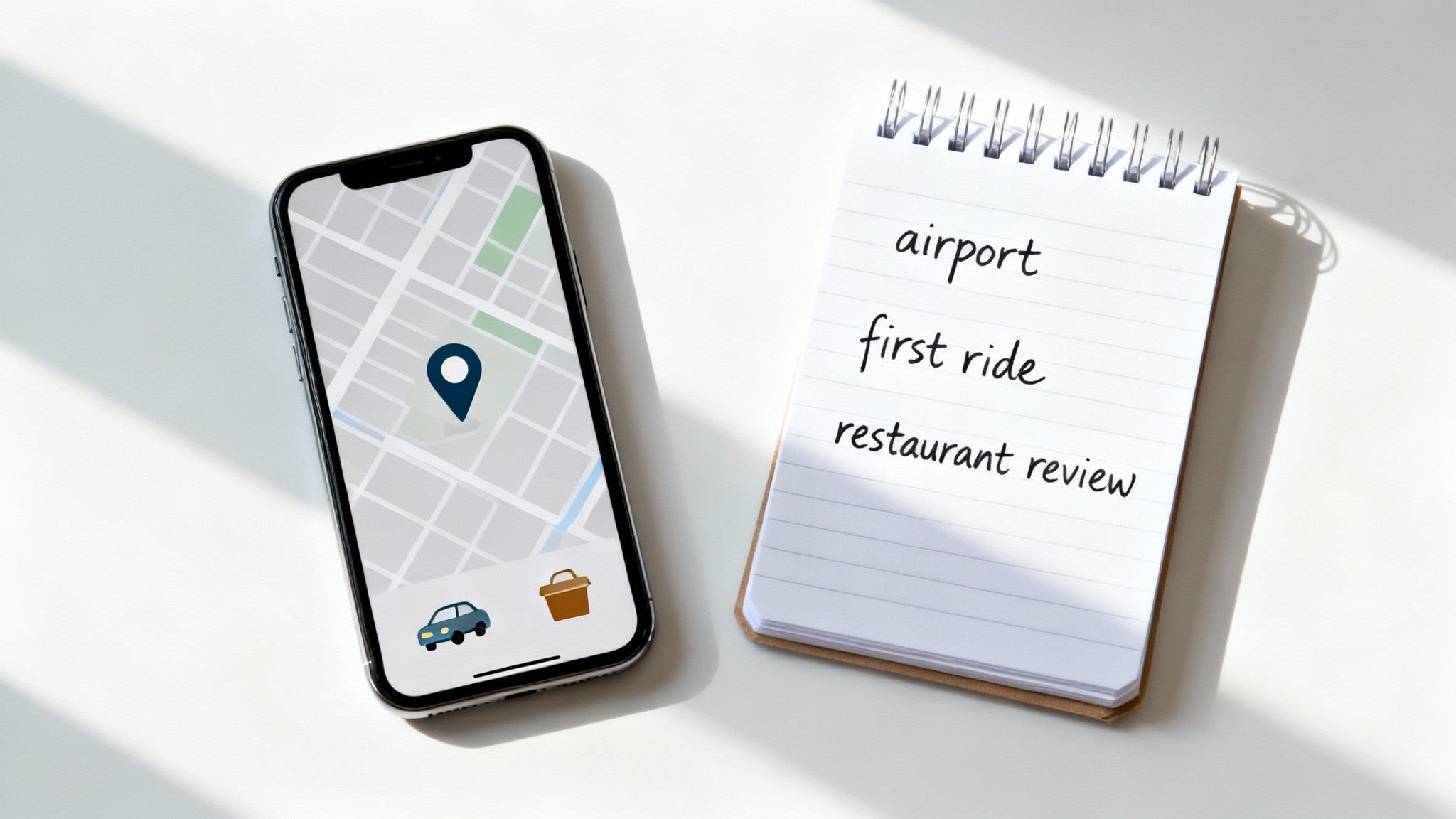
The real secret is catching the right people at the exact moment they need a ride or a meal. It’s about shifting your mindset from “promoting Uber” to “solving someone’s problem.” Your audience isn’t looking for an affiliate link; they’re looking for a dead-simple way to get from the airport to their hotel, or a quick fix for dinner. Your content needs to be the bridge.
Tailor Content to Your Niche
Generic content is just noise. Your real power comes from creating promotions that feel like they belong in your specific niche. A targeted approach will always beat a broad, one-size-fits-all message. Every single time.
- For Travel Bloggers: Your audience is literally filled with potential first-time Uber users. Create content that hits their biggest travel pain points. A detailed guide like “How to Get from JFK to Manhattan for First-Time Visitors” is the perfect spot to introduce Uber as the simple, stress-free option. Articles on navigating a new city or “what to do on your first day” are also prime real estate for your affiliate link.
- For Food Bloggers: The obvious connection here is Uber Eats. Don’t just review a restaurant; write about “The Best Takeout in Austin for a Rainy Day” and feature spots that deliver with Uber Eats. You could even work it into recipe posts—suggesting Uber Eats for those nights when your readers are just too wiped to cook.
This kind of specialized content makes your recommendation feel genuine and helpful, which is the cornerstone of any promotion that actually works. It’s really about building trust, which is the heart of potent word-of-mouth marketing strategies.
Master Location-Based SEO
To grab that high-intent traffic, you have to think like someone with an immediate problem to solve. This is where location-based SEO becomes your most powerful weapon. You need to target the long-tail keywords that signal someone is ready to sign up right now.
The goal is to rank for the exact search terms people are punching into Google just before they need a ride. Forget “Uber review” and think more about the specific situation that triggers the search.
Focus your content on keywords like these:
- “First Uber ride discount Chicago”
- “How to get from LAX to downtown”
- “Uber Eats promo code for new users”
These are the terms used by people who are actively looking to become customers. When you create content that answers these specific questions, you become the last helpful resource they see before they sign up.
A killer way to do this is by building out targeted landing pages for each city or airport you want to focus on. Honing your skills in building high-converting affiliate marketing landing pages can seriously boost your earnings by giving users a focused experience. This strategy turns your blog from a passive library of content into an active conversion machine that drives consistent referrals.
Got Questions? I’ve Got Answers
Jumping into a new affiliate program always brings up a few questions. It’s totally normal. To clear things up, I’ve pulled together the most common ones I hear about Uber’s program, with direct, no-fluff answers.
What Are the Main Requirements to Get Approved?
Honestly, it’s pretty straightforward. You’ll need an established platform—think a website, blog, or a social media channel that gets consistent traffic from a relevant audience.
Uber wants to see that you can represent their brand well and actually bring in new sign-ups. Think of your platform as your application; it needs to show you’re a credible voice in your space.
How Long Does It Take to Get Paid?
Payouts usually happen monthly, but don’t expect the money to hit your account right away. There’s typically a 30- to 60-day delay for them to verify everything and process the payment. This is pretty standard stuff in the affiliate world.
You’ll also need to hit the network’s minimum payout amount, which is often around $50 or $100, before they send the cash.
The key takeaway here is to plan for this lag. Commissions you earn in January probably won’t land in your bank account until February or March. Just factor that into your cash flow.
Can I Promote Uber in a Country Where I Don’t Live?
Yes, you usually can. This is a huge plus for travel bloggers or anyone with an international audience. You can promote Uber in any country where their affiliate program is active, even if you’re halfway across the world.
That said, always double-check the specific terms and conditions of your affiliate agreement. You want to be sure which countries are fair game for promotion.
Are There Restrictions on Using Paid Ads?
Absolutely, and this one is critical. Most affiliate programs, Uber included, have iron-clad rules against bidding on their brand name in places like Google Ads.
That means you can’t bid on keywords like “Uber” or “Uber discount.” Breaking this rule is one of the fastest ways to get your account shut down and lose every penny you’ve earned. Seriously, read the promotional guidelines before you even think about running paid ads.
Ready to stop guessing and start building a real, profitable affiliate business? At Daniel Proctor, we provide the mentorship, step-by-step guides, and 1-on-1 support to help you succeed. Join our free masterclass today and learn the systems that work.
